

FIND THE CONTENTS THAT INTEREST YOU
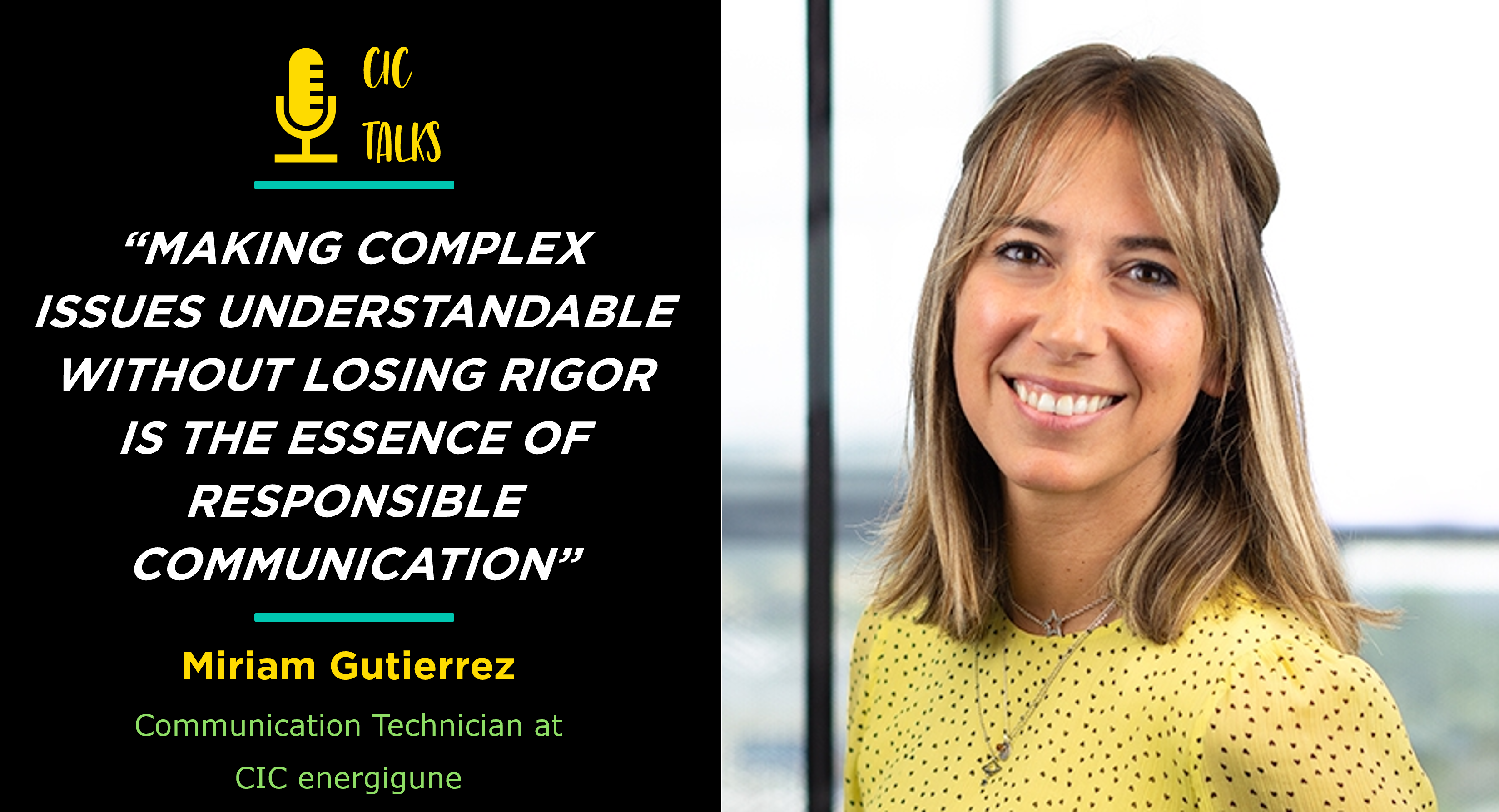
Science communication is essential because it allows society to understand the real value of the research we carry out. In a field such as energy, where technological decisions directly influence everyday life, explaining what we do and why it matters is just as important as scientific progress itself. Beyond informing, science communication builds trust, encourages scientific vocations, attracts potential collaborators, and positions knowledge as a driver of change.
Energy research only makes sense when it is transformed into concrete solutions. At CIC energiGUNE, we collaborate with companies, institutions, and international stakeholders, and clear communication enables us to convey opportunities, challenges, and advances in an understandable way. For citizens, communication helps break down barriers and explain complex concepts such as energy storage, hydrogen technologies, or advanced materials. For industry, science communication becomes a tool that facilitates understanding trends, capabilities, and the value of the innovation we develop.
An absolutely central one. Scientific communication can no longer rely solely on written articles. We need agile, visual formats adapted to each channel. At CIC energiGUNE, we use short videos that summarize key concepts in under a minute, infographics and visualizations that help explain complex processes intuitively, multimedia pieces that show how we work in our laboratories, interviews and narrative content that humanize research, and thematic campaigns that link scientific advances to social or industrial challenges. Thanks to this diversity of formats, we are able to reach students, industry professionals, and innovation decision-makers alike.
This is one of the most important challenges. Translating scientific concepts without diluting their meaning requires close collaboration with researchers. We rely on clear, direct, and visual language, using examples, comparisons, and metaphors that help turn the abstract into something tangible. The priority is always to maintain balance: making the complex understandable without sacrificing precision. That is the essence of the responsible science communication we promote.
Social media are essential for democratizing access to science. Each platform requires a specific style, which is why we adapt content to its characteristics. LinkedIn is key for institutional communication and for connecting with companies and R&D professionals. Twitter or X allows us to share scientific news immediately. Instagram helps us reach younger audiences through visual and narrative approaches. Every piece of content consistently reflects CIC energiGUNE’s identity: rigor, clarity, and a strong link to the energy transition.
Misinformation is one of the major challenges of our time, especially in areas such as energy, where interests, lack of knowledge, and oversimplified messages often intersect. Our role is to provide verified, understandable, evidence-based information. We do this through content that clearly explains key concepts, through the voices of our experts, and through an active presence on the digital channels where conversations take place. It is also essential to promote critical thinking: not only communicating data, but also teaching how to interpret information. The more accessible science is, the less room there is for misinformation.
Communication is a fundamental part of our institutional mission. It helps position us as a reference in energy storage, strengthen strategic alliances, attract international talent, and showcase the value of the Basque scientific ecosystem. When a company, a student, or a citizen understands what we do and why it matters, we are fulfilling our social responsibility and contributing to the advancement of knowledge.
The greatest opportunity is that society is showing increasing interest in topics related to energy, sustainability, and technology. This opens the door to stronger connections with diverse audiences. The main challenge is standing out in an information-saturated environment where attention is limited. We will need to be more creative, closer to people, and more strategic, while always maintaining rigor. I believe the future lies in hybrid formats that combine multimedia, interactivity, and even tools based on artificial intelligence. CIC energiGUNE aims to be at the forefront of this evolution.
If you want to know the latest trends in energy storage and new developments in research, subscribe.
If you want to join a top-level team, collaborate with specialists in multiple disciplines or tell us about your concerns, don't think twice...