
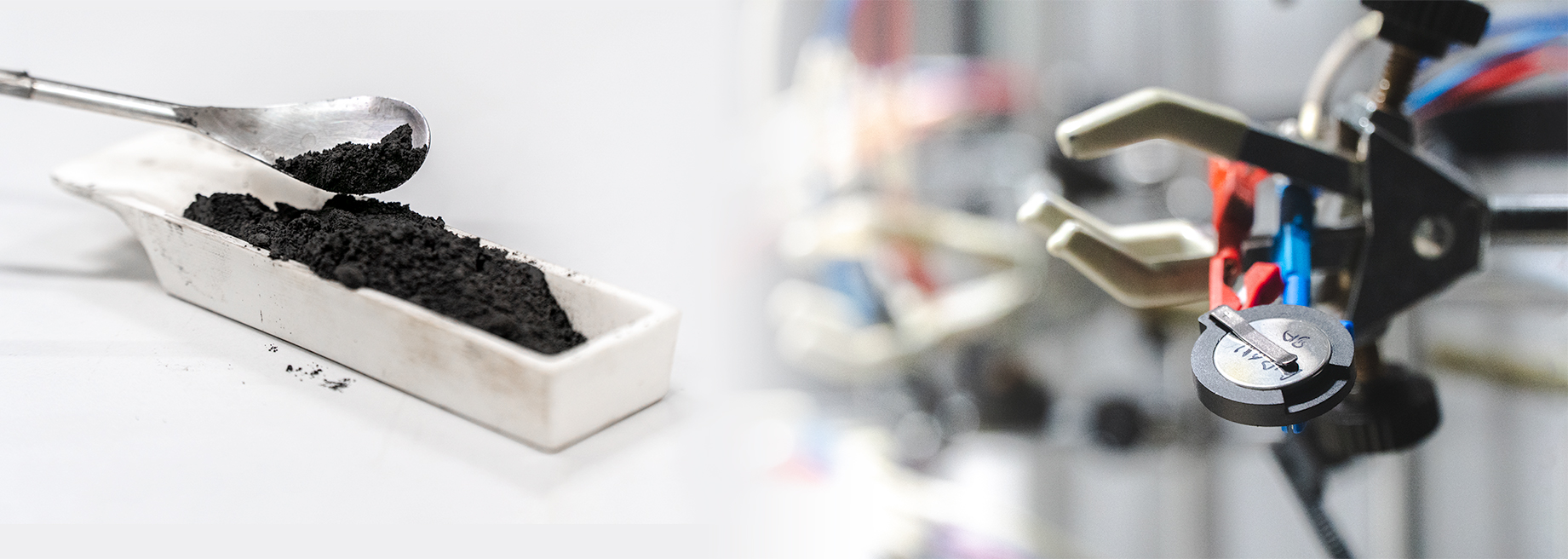

Developing new energy storage technologies is not only about identifying new battery chemistries. One of the major challenges is also to accelerate the way the materials determining their performance are discovered, optimized and understood.

With this goal, CIC energiGUNE launched SMART – Sodium-ion battery Materials Accelerated Research by high-Throughput approach (PID2022-140823OB-I00), within Spain´s Knowledge Generation Projects 2022 programme.

Led by Marine Reynaud and Damien Saurel, SMART runs from 2023 to 2026 and focuses on a technology gaining increasing relevance as a complementary energy storage solution: sodium-ion batteries. Rather than approaching electrode development from a purely materials-based perspective, the project combines materials science, experimental automation, advanced characterization and digital tools. The original proposal identifies the performance of active electrode materials as one of the main bottlenecks for further progress in sodium-ion technology.

A vast materials space still waiting to be explored

Sodium-ion batteries are attracting interest because of their potential to complement other storage technologies while reducing reliance on certain critical raw materials. However, there is still considerable scope to improve the performance of their electrode materials.

One of the opportunities lies precisely in the chemical richness of sodium-based compounds. Their compositions, crystal structures and phase diagrams offer an extensive exploration space that has not yet been exhaustively investigated. This creates opportunities to discover new compositions with improved electrochemical properties, but it also presents a challenge: experimentally exploring all these possibilities through conventional trial-and-error approaches can require enormous amounts of time and resources.

SMART was conceived to change this approach.

The project focuses on three key families of electrode materials for sodium-ion batteries: sodium transition-metal layered oxides, Prussian White compounds and hard carbons. Rather than studying only a limited number of isolated compositions, SMART aims to systematically explore compositions, phases and synthesis conditions to identify materials capable of delivering improved performance.
Automation as a tool for faster research

SMART´s main innovation therefore lies not only in the materials under investigation, but also in the methodology used to discover and optimize them.

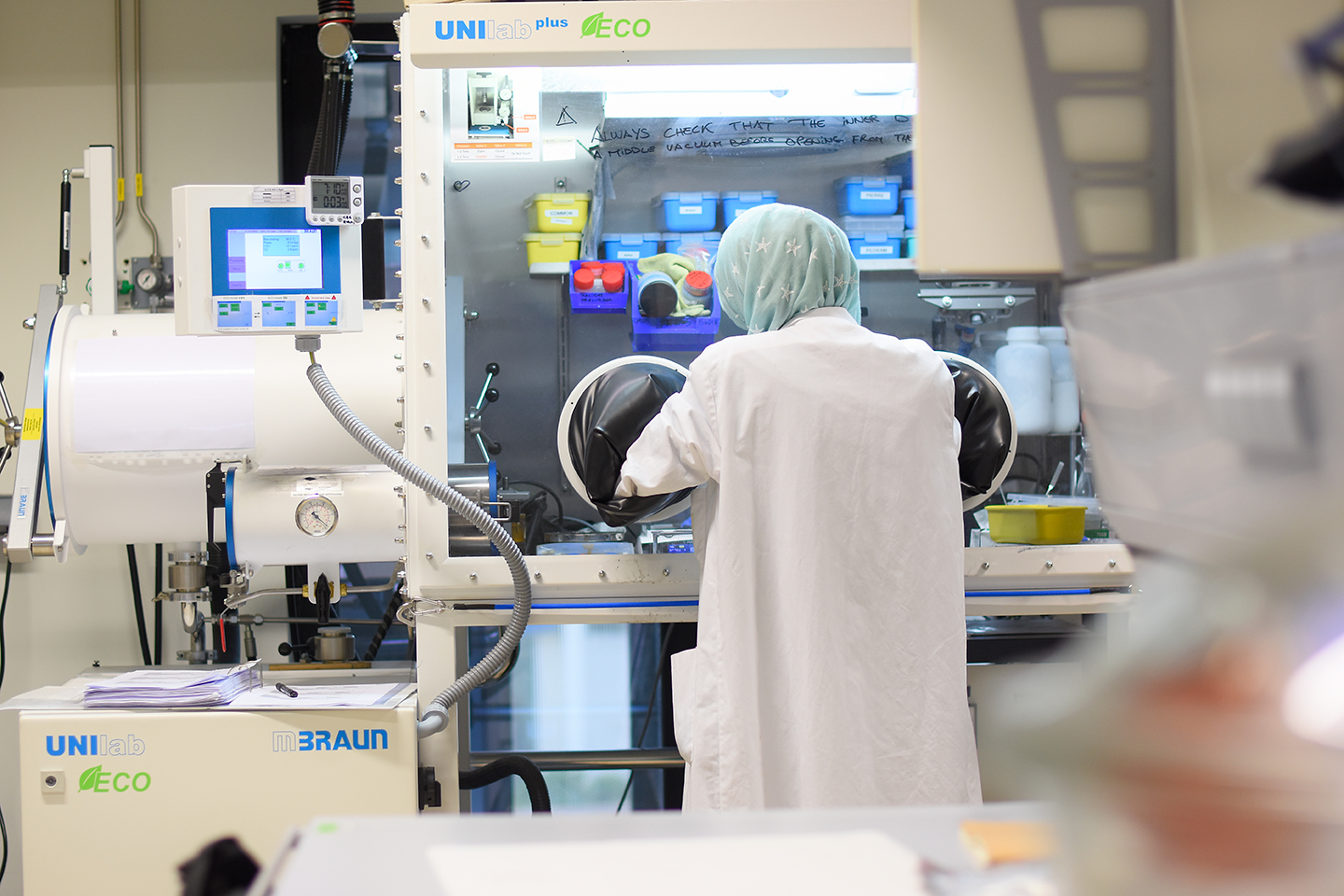
Instead of relying exclusively on a sequential workflow in which every experiment is prepared, performed and analysed individually, SMART develops automated high-throughput experimental methods capable of studying many more variables efficiently and reproducibly.

This requires the development and optimization of systems that can automate different stages of the research workflow, from materials synthesis to characterization. Automation makes it possible to increase experimental throughput while improving comparability between results and reducing repetitive tasks traditionally requiring substantial manual intervention.

Advanced characterization is another cornerstone of the project. Techniques such as X-ray diffraction (XRD), together with operando experiments at large-scale research facilities such as the ALBA Synchrotron, can reveal not only a material´s initial structure but also how it evolves during battery charge and discharge. From its inception, the project envisaged access to ALBA for operando experiments and to high-performance computing resources for density functional theory calculations.

From experiment to data and from data to the next experiment

Accelerating materials discovery also means efficiently managing the large amounts of information generated during research.

SMART therefore incorporates data standardization, management and automated analysis tools, together with artificial intelligence and machine-learning methods. The ultimate aim is to move towards a process in which experimental results can intelligently inform which compositions or experimental conditions should be investigated next.

This is known as a closed-loop approach between experiments and models: experiments generate data, data feed the models, and the models help select the potentially most informative next experiments. The aim is to reduce unnecessary iterations and direct experimental resources towards the most promising regions of the materials space.

A methodology extending beyond sodium-ion batteries

Although sodium-ion batteries provide SMART´s main research case, the project´s methodological scope extends much further. Automated synthesis and characterization, standardized data management and algorithm-assisted decision-making can also be applied to many other material families and research fields.

SMART therefore contributes to the development of Materials Acceleration Platforms, which integrate experimentation, automation, characterization, data and computational tools to shorten the time needed to discover and optimize new materials.

Through SMART, CIC energiGUNE strengthens its research on advanced materials for energy storage while taking another step towards a research model in which automation, scientific knowledge and digital tools work together to accelerate the journey from materials exploration to understanding and optimization.

Cookies on this website are used to personalize content and advertisements, provide social media features, and analyze traffic. You can get more information and configure your preferences HERE