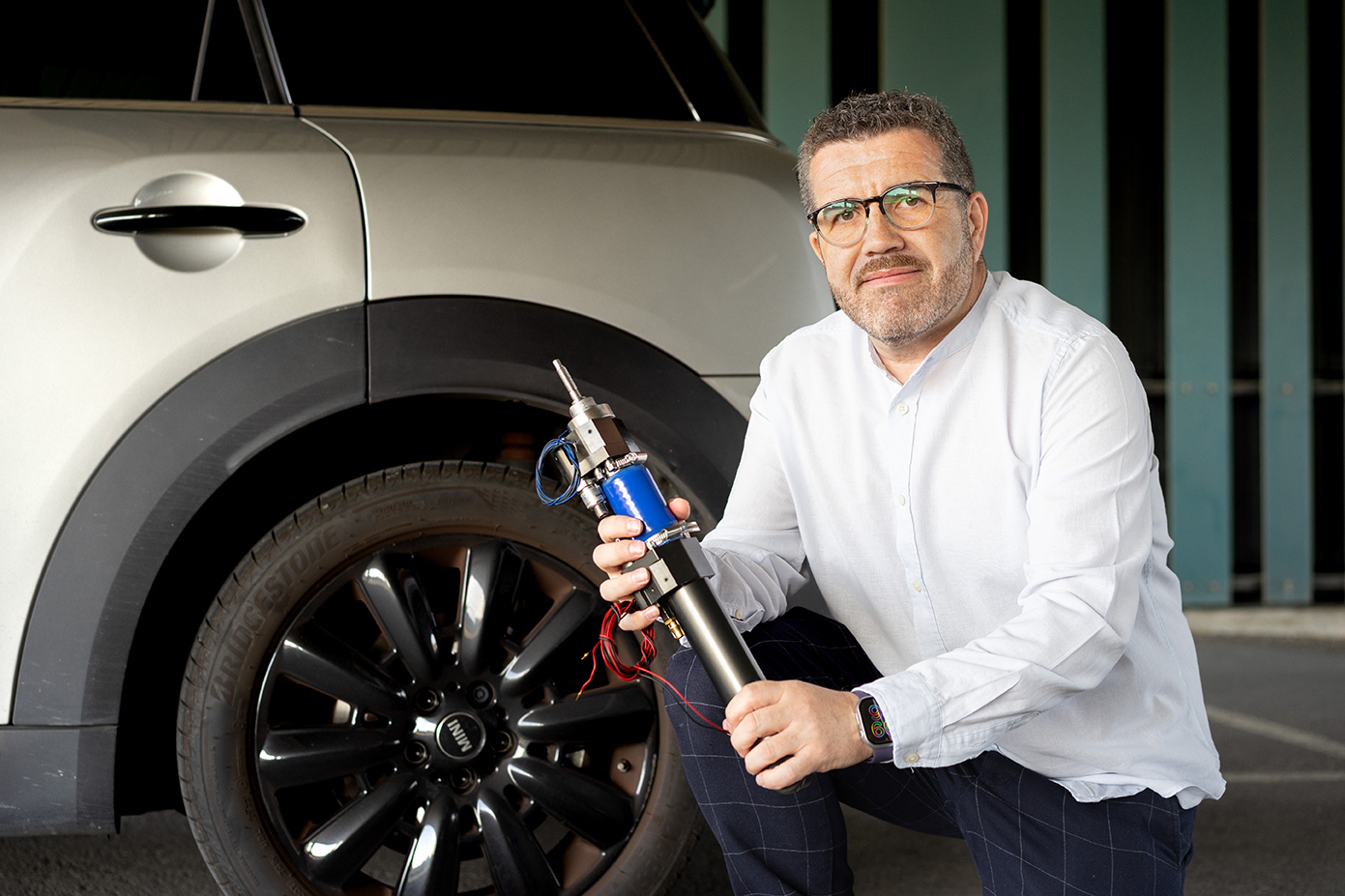

CIC energiGUNE, the Basque reference research center for electrochemical and thermal energy storage and conversion, is leading a new European project aimed at accelerating the industrial validation of a disruptive damping technology with the potential to drastically reduce the use of oil in hydraulic systems.
The initiative builds on the results of the European Electro-Intrusion project, funded under Horizon 2020 (GA 101017858), in which a functional regenerative shock absorber prototype based on intrusion-extrusion phenomena in nanoporous materials was developed. This technology enables the use of water or aqueous solutions instead of large amounts of hydraulic oil, paving the way for more sustainable and efficient damping systems.
The prototype validated during the project has already demonstrated a 2.6-fold reduction in oil usage compared to conventional commercial solutions, attracting the interest of industrial stakeholders in the automotive and suspension systems sectors.
The new project, funded through the BOOST programme (BOOS_08_02), will now focus on evaluating the industrial scalability, environmental impact, economic viability, and market potential of this technology, generating the analytical basis required for a future EIC Transition proposal aimed at increasing its technological maturity level.
“We are at a key moment to transform a highly promising scientific demonstration into a real industrial opportunity,” explains Yaroslav Grosu, Group Leader at CIC energiGUNE and coordinator of the Electro-Intrusion project. “The technology has demonstrated that it is possible to completely rethink traditional hydraulic systems through the use of nanoporous materials and alternative fluids, with enormous potential in terms of sustainability and efficiency.”