

FIND THE CONTENTS THAT INTEREST YOU
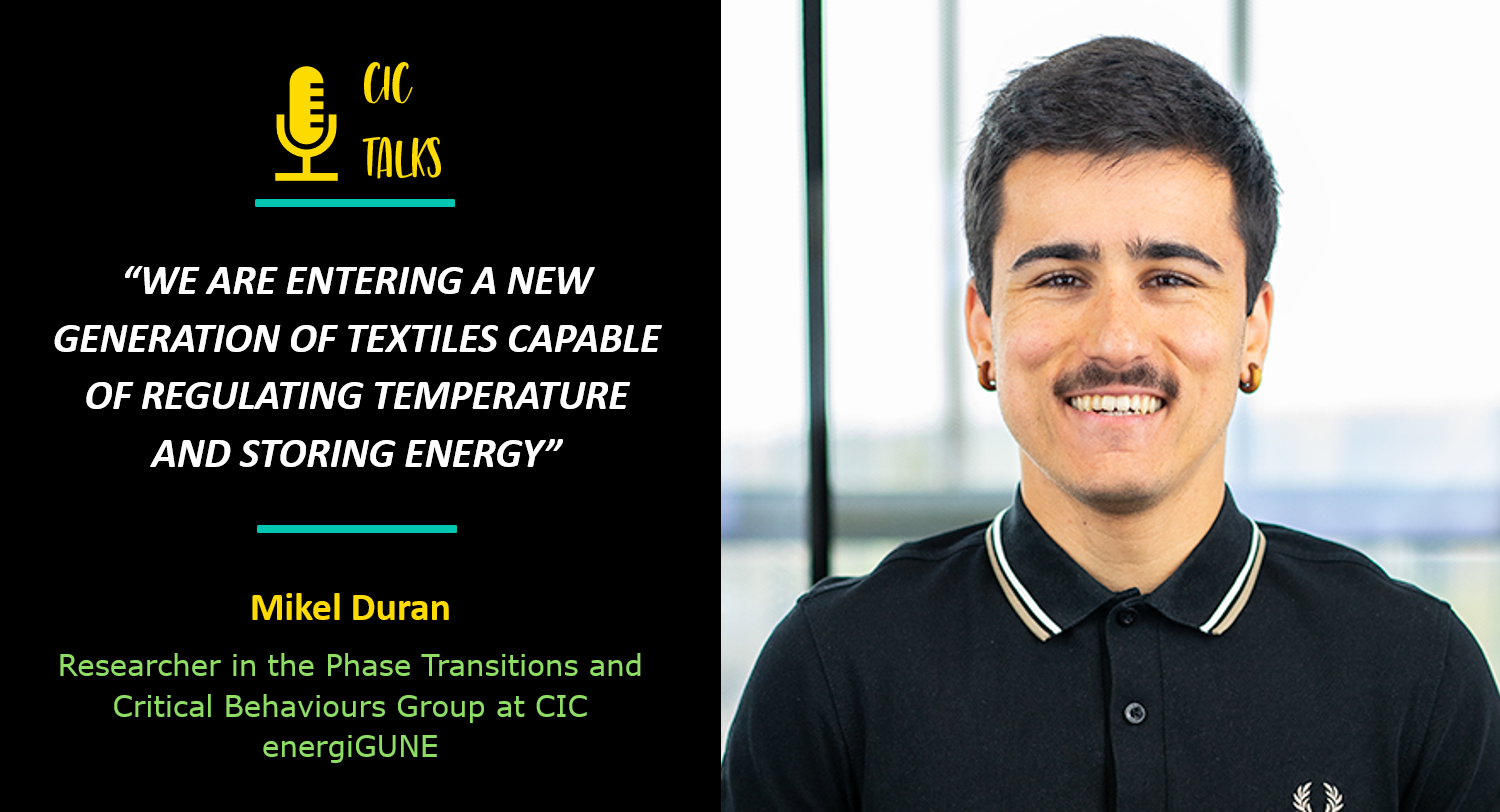
Yes, we are entering a new generation of textiles much more focused on thermal comfort and adaptation to the user. The idea is no longer just to protect against cold or heat, but to develop materials capable of helping maintain a more stable and comfortable temperature depending on the activity or the environment.
This is especially interesting in areas such as high-performance sport, wearables or health, where thermal management can have a direct influence on wellbeing, physical performance or muscle recovery.
Because textiles are evolving towards much more functional solutions focused on the user experience. Today, there is a growing demand for garments that are more comfortable, lightweight and capable of better adapting to different thermal situations.
This makes textiles a very interesting environment for integrating materials that help improve thermal comfort naturally, especially in sectors such as sport, health, wearables or mobility.
It can help improve the user’s thermal comfort in situations where temperature has a direct impact on performance, fatigue or wellbeing. For example, in sports such as cycling or Formula 1, better thermal management can help reduce thermal stress and improve comfort during prolonged efforts.
We also see very interesting applications in health and thermotherapy, where textiles can help provide heat in a more homogeneous and comfortable way during recovery or treatment processes.
The experience changes significantly because the technology is no longer perceived as something external or uncomfortable. The fabric itself helps maintain a more stable and comfortable thermal sensation in a much more natural way, without the need for rigid devices or visible systems.
This is especially important in applications where freedom of movement and comfort are key, such as sport, wearables or certain professional environments.
Yes, little by little we are evolving towards much more dynamic and intelligent textiles. Until now, most garments were limited to insulating against cold or heat, but new solutions aim for the material itself to respond better to changes in temperature and to the user’s thermal needs.
The trend is to develop garments capable of providing more adaptable and personalised thermal regulation, improving comfort in very different usage situations.
That is precisely one of the major challenges in this type of material. It is not enough to incorporate new functionalities; it is also essential for the fabric to remain comfortable, lightweight, flexible and natural to use. If the technology compromises ergonomics or the user experience, it is very difficult for it to truly reach the market.
That is why much of the current work focuses on integrating functionality directly into fibres, films or flexible structures, so that the user practically does not perceive the presence of the technology in the garment.
We see the most immediate applications in areas where thermal comfort has a direct impact on the user. For example, in sportswear and high-performance clothing, wearables, health or thermotherapy, where there is growing demand for solutions capable of helping to better regulate body temperature.
There is also strong interest in sectors such as cycling, outdoor sports or even motorsport, where properly managing temperature can influence both performance and recovery.
We will probably see garments capable of better adapting to the user’s thermal needs according to the activity or environmental conditions. For example, sportswear that helps maintain a more stable temperature during exertion, or textiles aimed at muscle recovery and thermal wellbeing.
Many of these solutions seem futuristic today, but the integration of thermal management directly into fabrics is advancing very quickly, and we are increasingly seeing applications closer to the market.
Although the potential is very significant, there are still important challenges related to scalability, industrial integration and costs. It is not only about developing functional materials in the laboratory, but also about ensuring they can be manufactured reliably, flexibly and competitively on a large scale.
In addition, it is essential to guarantee aspects such as durability, comfort, safety and compatibility with real textile processes, so that these solutions can be naturally integrated into commercial products.
At CIC energiGUNE, we work to ensure that these materials do not remain only in the laboratory, but can be integrated into real and industrial applications. To do this, we develop solutions while considering aspects such as flexibility, scalability and compatibility with existing textile processes from the outset.
In addition, we collaborate with companies and industrial sectors to adapt the materials to specific needs and accelerate their transfer to real products, especially in areas such as wearables, sport, health or advanced thermal management applied to the user.
If you want to know the latest trends in energy storage and new developments in research, subscribe.
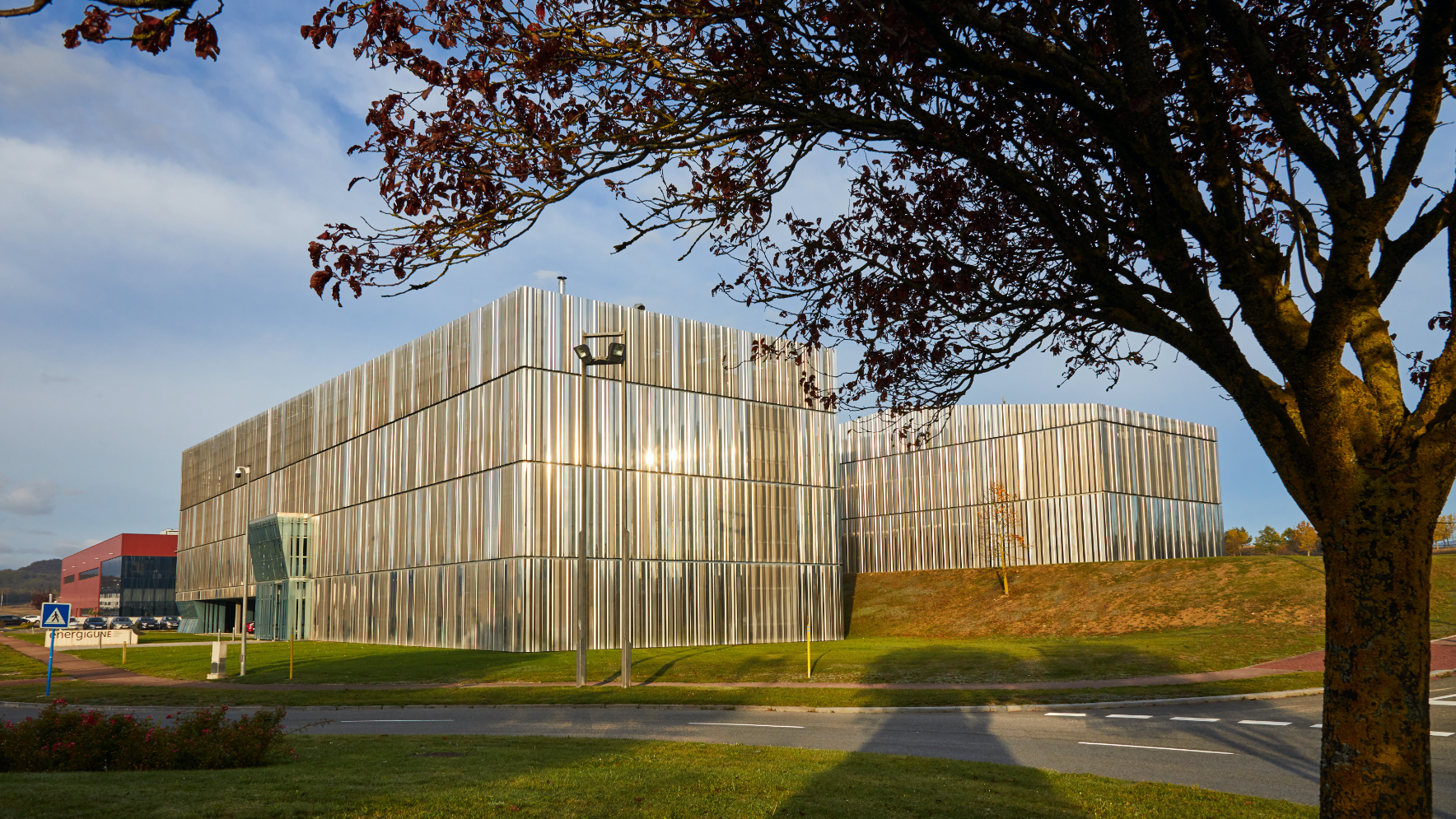
If you want to join a top-level team, collaborate with specialists in multiple disciplines or tell us about your concerns, don't think twice...