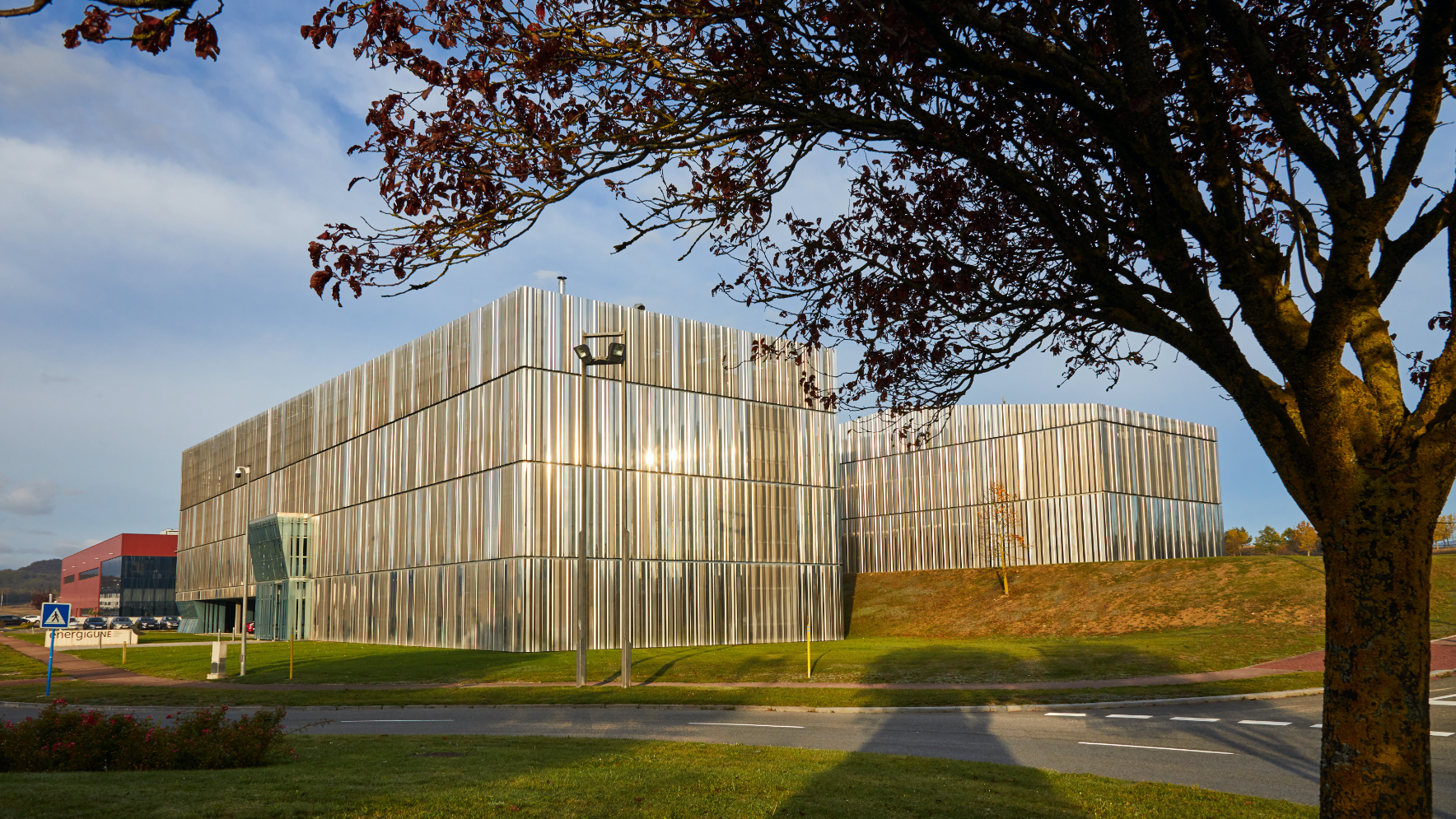


The Basque center has received approval from the Ministry of Science, Innovation, and Universities to develop two individual projects focused on electrothermal storage and the development of lithium-sulfur batteries, as well as a coordinated project with the University of the Basque Country (EHU) and the DPIC-Donostia International Physics Center that aims to transform CO2 and nitrates into high added-value products.

CIC energiGUNE, a leading Basque research center in electrochemical energy storage and conversion, as well as thermal energy storage and conversion, has obtained approval from the State Research Agency for three of its projects to receive funding from the Ministry of Science, Innovation, and Universities´ “Knowledge Generation Projects 2025” call for proposals. Two of the projects are individual, with CIC energiGUNE as the sole implementing entity, while the third is a project coordinated by the Basque center in collaboration with the University of the Basque Country (EHU) and the DPIC-Donostia International Physics Center.

“Once again this year, we have achieved a very significant success rate in the AEI program call, which highlights our team´s capacity for innovation,” said Iratxe Gonçalves, head of public funding at CIC energiGUNE. “Furthermore, these are projects with a remarkably disruptive vision, which could have a decisive impact in critical areas such as the decarbonization of industrial heat, the recovery of greenhouse gases and pollutants present in water streams, and the development of a new battery technology as an alternative to lithium-ion,” she said. 

The first project included in the call for proposals “Knowledge Generation Projects 2025” is POLYHEDRA, led and executed entirely by CIC energiGUNE through its Department of Thermal Energy Storage and Conversion. This project aims to develop a new concept in electrothermal energy storage capable of supplying heat at high temperatures, above 400 °C, which places it well above most current commercial solutions.
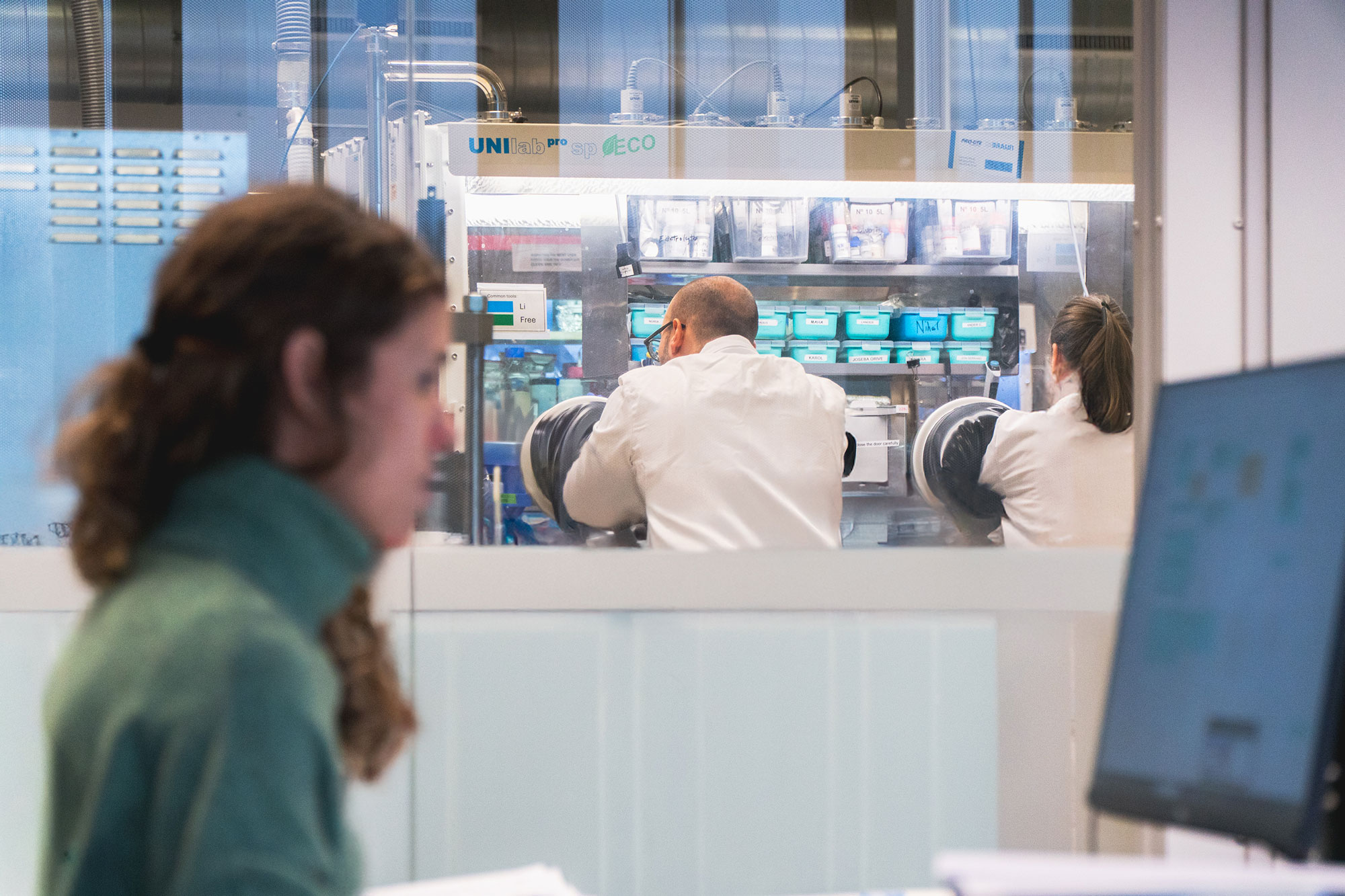
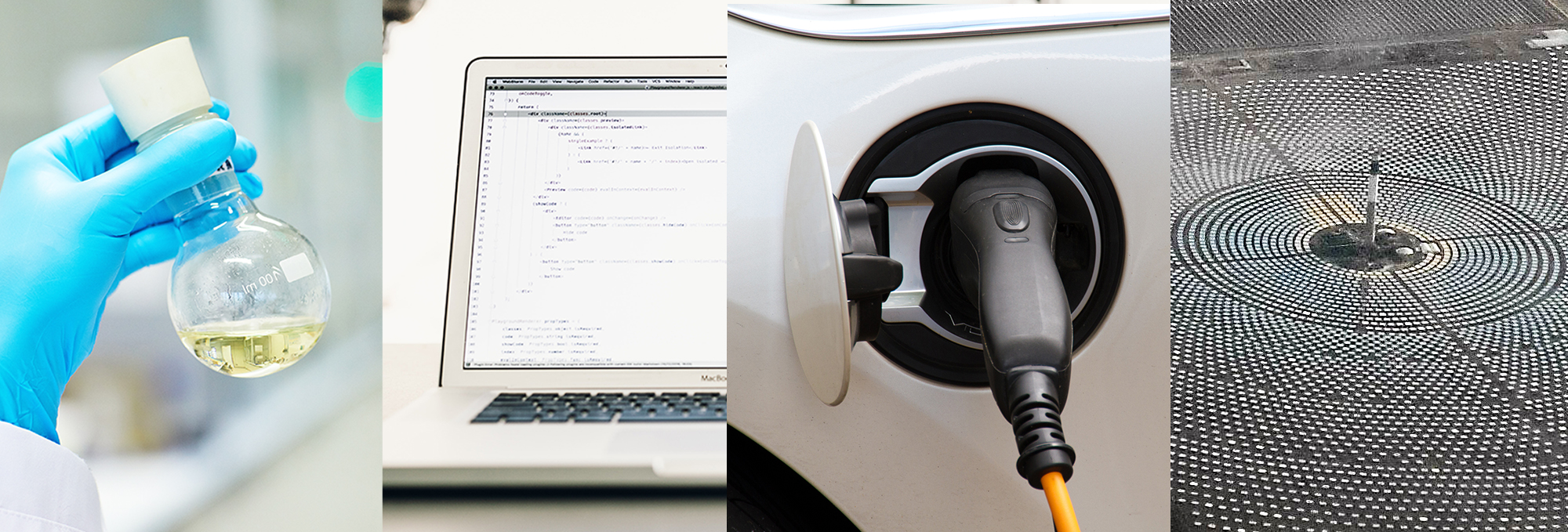
The key innovation of POLYHEDRA lies in the combination of magnetic induction heating with advanced magneto-dielectric phase change materials, which allow thermal energy to be stored more efficiently, compactly, and safely than existing technologies. This approach significantly improves the energy density, charging speed, and service life of the system, while reducing investment and maintenance costs. Furthermore, it has the potential to become an enabling technology for the electrification of industrial heat, contributing to the decarbonization of this concept, which is responsible for a very significant proportion of global CO2 emissions.

Elena Palomo, Scientific Director of the Thermal Energy Storage and Conversion Area, and Artem Nikulin, researcher in the Phase Transitions and Critical Behaviors Group, are the CIC energiGUNE researchers responsible for this project..

CIC energiGUNE´s second individual project is NovELIS, which focuses on the development of lithium-sulfur batteries, an emerging technology with the potential to surpass lithium-ion batteries in energy density and cost, which may be key for applications such as heavy electric mobility or the aerospace sector.

The project takes a comprehensive approach that addresses all battery components, from new materials for cathodes and advanced carbon matrices to safer and more stable electrolytes and higher-quality lithium anodes. NovELIS is expected to contribute to the development of lighter batteries with greater autonomy and longer service life, accelerating the transition to more sustainable energy storage systems.

Daniel Carriazo, Ikerbasque Research Professor and Leader of the Solid State Electrolytes line, and Alexander Santiago, Senior Researcher in the Organic and Hybrid Materials group, are in charge of this project.

Finally, the PROEZA project aims to generate a disruptive alternative to conventional urea production—an essential product for fertilizer manufacturing and the chemical industry—through a sustainable electrocatalytic process that transforms CO2 and nitrates, two environmental pollutants, into a high added-value product. In this case, CIC energiGUNE acts as the coordinating entity for the project developed in collaboration with the University of the Basque Country (EHU), in which the DPIC-Donostia International Physics Center also participates.

The PROEZA project focuses on the design of double-atom catalysts based on abundant elements, capable of efficiently and selectively promoting the formation of carbon-nitrogen bonds, one of the greatest current challenges in electrosynthesis. This is expected to have a direct impact on the circular economy and the decarbonization of the chemical industry by converting emissions and pollutants into a strategic product.

In addition, the knowledge generated could be extended to other electrosynthesis processes, driving the development of sustainable fuels and chemicals powered by renewable energies. Max García Melchor, Ikerbasque Research Professor and leader of the Atomistic and Molecular Modeling for Catalysis Group, is responsible for this project at CIC energiGUNE.

Cookies on this website are used to personalize content and advertisements, provide social media features, and analyze traffic. You can get more information and configure your preferences HERE