

FIND THE CONTENTS THAT INTEREST YOU
A battery with higher energy density, a wind turbine that reduces its dependence on certain critical raw materials, a material capable of storing heat more compactly, or a new catalyst for producing renewable fuels all ultimately depend on our ability to design materials with increasingly specific properties.
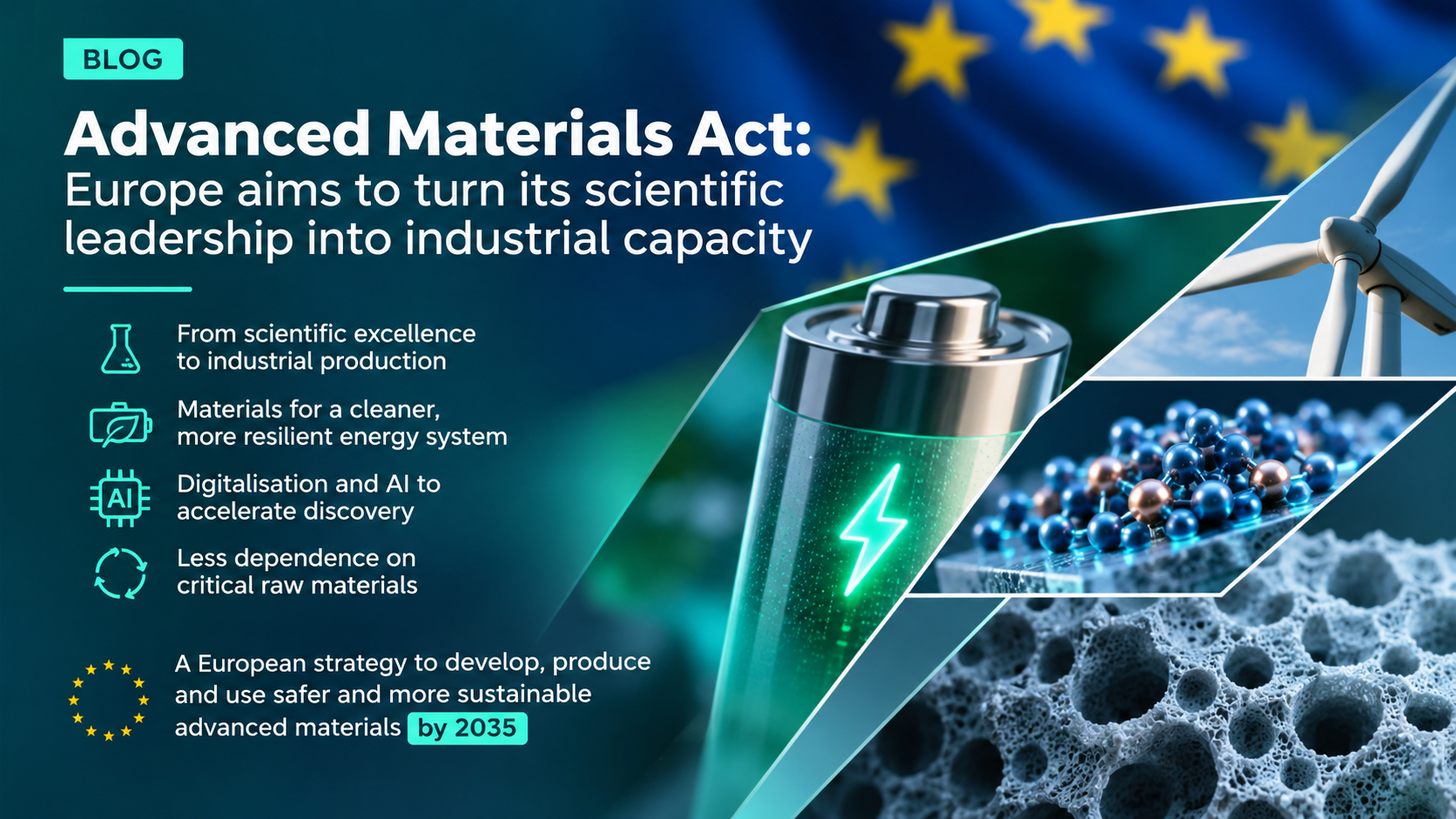
The European Commission now wants to turn this technological reality into an industrial priority. On 18 November 2026, it presented Advanced Materials for Europe, the initiative associated with the so-called Advanced Materials Act, with the aim of making the European Union the global leader in the development, production and use of safer and more sustainable advanced materials by 2035. The proposal takes the form of a Council Recommendation and seeks, above all, to coordinate action among Member States and accelerate the journey from laboratory innovation to industrial manufacturing and use.
The initiative addresses a familiar paradox within the European innovation system. Europe has world-class universities, technology centres, companies and scientific capabilities, yet it faces greater difficulties in turning certain scientific breakthroughs into industrial products manufactured at scale. The Commission itself identifies fragmentation across countries and sectors, limited access to testing and pilot facilities, lengthy qualification processes, shortages of certain professional skills and difficulties in scaling up new technologies.
In advanced materials, this gap can be particularly significant. Discovering a new composition with improved properties is only the beginning. The next steps involve demonstrating that it can be manufactured reproducibly, integrated into a device, maintain its performance over thousands of cycles or many hours of operation, pass validation processes and ultimately compete economically and environmentally with materials that industry has been using for decades. The new European strategy is specifically designed to address this transition.
The Commission defines advanced materials as materials rationally designed to provide new or improved properties and achieve a specific functionality. This definition is deliberately broad, covering technologies with potential applications in energy, mobility, electronics, construction, healthcare and many other industrial sectors.
Advanced materials are therefore not an isolated market. They are an enabling technology that can determine the performance of many of the technologies considered strategic for Europe.
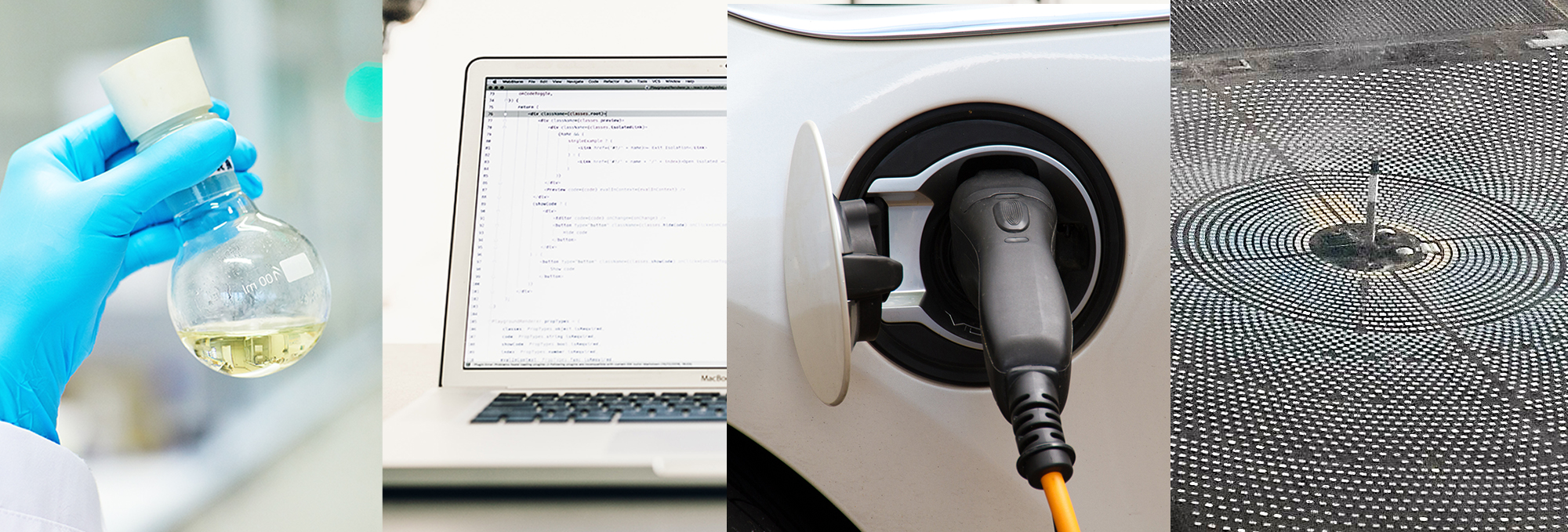
This is particularly evident in energy. Battery performance depends on electrode materials, electrolytes, separators and interfaces. The efficiency of many hydrogen or synthetic fuel production processes depends on new catalysts. Thermal energy storage requires materials capable of storing and releasing heat reliably. Wind turbines, electric motors and various electrification technologies depend on magnetic materials, composites or structural materials with specific properties.
This cross-sector relevance explains why Europe is not simply proposing to increase scientific research. One of the initiative´s main messages is the need to shorten the time between discovery and market deployment.
The Commission proposes three major quantitative benchmarks for 2035: increasing investment in advanced materials research and innovation by at least 20%, increasing the number of European startups and scaleups in the sector by 20%, and achieving a 20% increase in the number of projects progressing towards higher levels of deployment of safe and sustainable materials.
To achieve these objectives, it identifies five main areas for action by 2030: focusing research and innovation investment on strategic sectors; using digitalisation and artificial intelligence to accelerate materials discovery and development; improving access to testing and qualification infrastructure; facilitating scale-up through strategic projects, demand-side policies and public procurement; and strengthening the professional skills required by these emerging industries.
It is probably this combination that makes the proposal particularly interesting. Europe is recognising that funding basic or applied research is not enough if the facilities, financial mechanisms, early customers or industrial capacity needed to complete the final steps towards the market are subsequently missing.
The challenge is not simply to discover better materials. It is to ensure that materials developed in Europe can also be validated, scaled up, manufactured and incorporated into European products.
The industrial scale of this challenge is considerable. According to the Commission, more than 15,000 companies currently operate in the advanced materials sector in the European Union, and around 1.5 million jobs are linked to this ecosystem. In addition, Horizon Europe has allocated approximately €2.3 billion to advanced materials over the 2021–2027 period. Europe therefore has a significant scientific and industrial foundation on which to build. The challenge is to connect its different elements more effectively.
The new initiative also has a second particularly important dimension: the relationship between materials innovation and dependence on raw materials.
The energy transition is increasing demand for certain elements whose supplies are geographically concentrated. Developing new materials can help not only to improve performance, but also to reduce the amount of critical raw materials required, replace them with more abundant alternatives or facilitate product circularity.
The European Commission´s Joint Research Centre has recently analysed 266 materials-related innovation options that could help reduce dependence on critical raw materials in sectors such as energy, electronics, vehicles and construction. Many of these alternatives are already at advanced prototyping stages or even being deployed, although each substitution brings its own technological trade-offs and potential new dependencies.
This is particularly relevant to energy technologies. In batteries, for example, competition between different chemistries already demonstrates how the choice of material simultaneously determines performance, cost, safety, resource availability and recyclability.
The shift from compositions that rely heavily on certain metals towards alternatives based on more abundant materials is driven by both technological and industrial considerations. A similar situation applies to permanent magnets used in some renewable energy generation and electric mobility technologies. The Commission specifically highlights the development of magnets that reduce dependence on rare earth elements as an example of the challenges that could be addressed through a coordinated European advanced materials strategy.
But the opportunity goes far beyond replacing critical materials. There is also enormous potential to design materials with new functionalities. In electrochemical energy storage, this could mean higher-capacity electrodes, safer electrolytes, improved interfaces or technologies capable of operating for longer periods and under more demanding conditions.
In thermal energy storage, it could mean phase-change materials tailored to temperature ranges that are currently underserved, or materials capable of integrating energy storage and thermal management directly into components and systems.
In catalysis, it could enable the development of surfaces and porous materials designed to promote specific reaction pathways, improve CO₂ conversion or facilitate the transformation of waste into valuable chemical products.
And in all these cases, the same challenge arises: an extraordinary property demonstrated in the laboratory does not yet constitute an industrial solution.
Performance, raw materials, processability, stability, manufacturing, safety, sustainability, recyclability and cost must all be considered simultaneously.
This is precisely why another priority of the European initiative is particularly significant: using artificial intelligence, automation and digital tools to accelerate materials development.
Traditional discovery can involve synthesising and characterising a large number of compositions in succession until those with the best properties are identified. Combining modelling, interoperable databases, automated experimentation and artificial intelligence could make it possible to explore much larger materials spaces and identify the most promising candidates more quickly.
The Commission explicitly identifies digitalisation as one of the strategy´s five pillars and points to fragmented data and automated experimentation infrastructure as one of the current obstacles facing the European ecosystem.
But accelerating discovery will only have an industrial impact if the subsequent stages are accelerated as well. And that is probably the central message of the Advanced Materials Act. Europe´s problem is not a lack of scientific knowledge. It is a longstanding difficulty in turning some of that knowledge into productive capacity and companies capable of competing globally.
In energy technologies, this issue will be particularly important over the next decade.
The next generations of batteries, thermal materials, catalysts, electrolysers, electronic devices and renewable energy generation technologies will not compete solely on performance. They will also compete on security of supply, cost, sustainability, production capacity and speed of industrialisation.
European advanced materials policy seeks to address all these dimensions. Its success will therefore probably not be measured by the number of new materials discovered, but by a much more demanding criterion: how many of those materials actually become technologies, products and industrial manufacturing capacity in Europe.
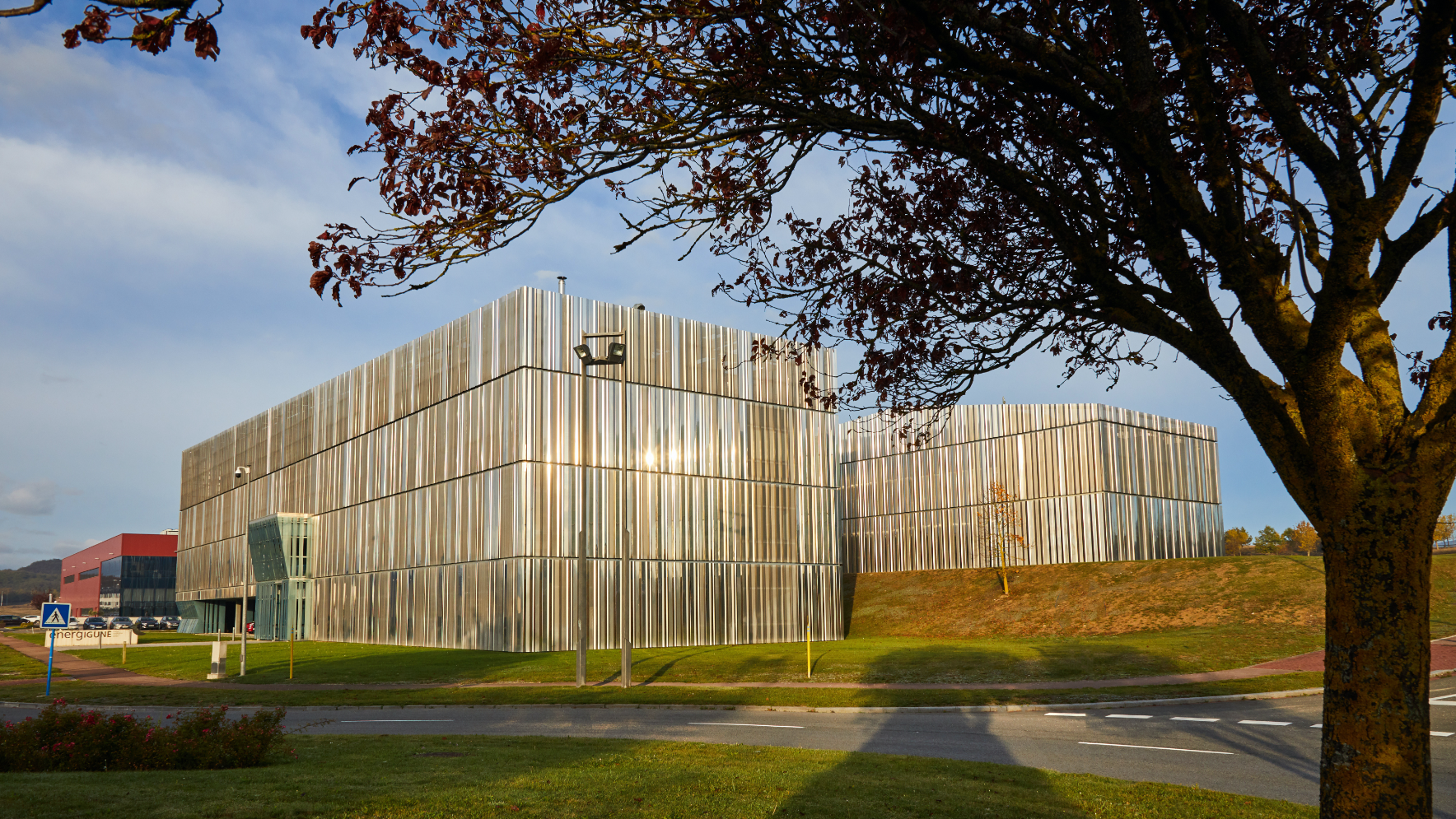
For research centres such as CIC energiGUNE, this scenario reinforces a trend that is already transforming energy R&D: developing advanced materials cannot be separated from understanding their intended application from the outset. Research will increasingly need to integrate material design with processing, characterisation, validation, sustainability, scale-up and future industrialisation.
Because the next competitive advantage in energy may begin in a materials laboratory, but it will only have a real impact when it can move beyond it.

If you want to know the latest trends in energy storage and new developments in research, subscribe.
If you want to join a top-level team, collaborate with specialists in multiple disciplines or tell us about your concerns, don't think twice...