

FIND THE CONTENTS THAT INTEREST YOU
The energy transition has moved beyond being a long-term objective to becoming a strategic necessity. The rapid growth of renewable energy, the electrification of transport and parts of industry, and rising demand driven by digitalization are transforming the way we produce, distribute, and consume energy. At the same time, expectations regarding security of supply, competitiveness, and emissions reduction continue to increase.
In this context, energy storage is one of the key enablers of the transition. It will be essential for integrating a higher share of renewable generation, providing flexibility to the grid, and improving system resilience. Together with hydrogen, thermal energy storage, and other energy vectors, it will also help decarbonize applications where direct electrification is not technically or economically feasible.
The challenge is to accelerate innovation and, above all, industrialization. We need technologies that are safer, longer-lasting, and more affordable, less dependent on critical raw materials, and designed from the outset to facilitate manufacturing, repair, and recycling. Achieving this will require stronger connections between research, industrial needs, and real operating conditions.
By 2030, the energy system will be more electrified, distributed, digitalized, and interconnected. The continued expansion of renewable generation will increase the need to manage variability, coordinate supply and demand, and integrate grids, storage, and flexible consumption. Electrification will progress at different rates across sectors, requiring solutions tailored to each application.
Energy storage will become more diversified in terms of both scale and response time, ranging from technologies capable of responding within seconds to solutions that can shift energy over hours, days, or even longer periods. At the same time, artificial intelligence, advanced computing, new materials, and circularity principles will enable the development of more efficient systems while accelerating innovation.
Batteries will remain essential because of their fast response and versatility. They will continue to play a central role in mobility, consumer electronics, and short- to medium-duration stationary applications, while ongoing research improves their safety, lifetime, cost, and reliance on critical materials.
Thermal energy storage will be particularly valuable for managing heating and cooling in buildings and industrial processes, where it can avoid unnecessary energy conversions. Long-duration energy storage, meanwhile, is not a single technology but rather a function that can be fulfilled by electrochemical, thermal, mechanical, or chemical solutions, depending on the required scale and storage duration.
The optimal choice will depend on factors such as power, storage duration, overall efficiency, energy density, cost, safety, environmental footprint, and operating conditions. Rather than competing for a single application, these technologies should complement one another and be deployed where they provide the greatest value to the energy system.
Direct electrification should remain the preferred option whenever it is efficient and technically feasible. However, renewable hydrogen and its derivatives can play an important role in high-temperature industrial processes, as feedstocks, in certain transport segments, and in applications requiring very long-duration energy storage.
Both electrochemical pathways for hydrogen production and catalytic and thermochemical processes capable of converting CO₂, biomass, or selected waste streams into fuels or chemical feedstocks will be important. Their climate benefits will depend on the origin of the electricity, carbon sources, and feedstocks used, making life-cycle assessment essential.
The challenge is not only to demonstrate that these technologies work but also to improve their efficiency and durability, reduce costs, and validate them at near-industrial scale. It will also be necessary to identify where they deliver the greatest value, considering resource availability, infrastructure requirements, and overall system efficiency.
This creates an opportunity to build more complete European value chains, from materials and components to manufacturing equipment, system integration, testing, and recycling. For research, it means directing a larger share of scientific knowledge toward challenges related to manufacturability, safety, durability, and the substitution of critical materials. For industry, it offers access to scientific capabilities, talent, and validation infrastructures located close to manufacturing activities.
The opportunity is not to replicate every existing technology, but to identify areas where Europe can differentiate itself through performance, sustainability, traceability, and industrial quality. Collaboration between research centers and industry will be particularly effective when it is organized around projects with clearly defined technical objectives, timelines, and industrialization roadmaps.
Artificial intelligence and high-performance computing are already transforming energy research. They enable researchers to analyze large datasets, predict material properties, model interfaces and degradation mechanisms, and identify experiments with the highest probability of success. This can significantly shorten development cycles that previously depended largely on trial and error.
Quantum computing remains at an early stage, and its practical impact is likely to emerge more gradually. Nevertheless, it could provide new capabilities for solving specific simulation and optimization problems. The most significant advances will come from integrating digital tools, scientific knowledge, and automated experimentation to discover and validate materials and processes more quickly and reliably.
Technology transfer begins when the problem is first defined. From the earliest stages, it is essential to identify the target application, the required performance, and the constraints related to cost, safety, regulation, and manufacturing. Developing a technology without considering these factors increases the risk of achieving an excellent scientific result that cannot be successfully industrialized.
It is also necessary to bridge the gap between laboratory research and technology validation. Pilot plants, scale-up capabilities, and demonstration environments make it possible to assess repeatability, quality, durability, and performance under conditions close to real operation, while generating the data required by future customers and certification processes.
Finally, effective intellectual property strategies, funding for intermediate development stages, and an industrial partner willing to validate the solution are all essential. Technology transfer depends not only on technological maturity but also on a compelling value proposition, a capable team, and a credible route to market.
We will need specialists with deep expertise in electrochemistry, materials science, catalysis, thermal processes, chemical engineering, electronics, and energy systems. Alongside them, professionals capable of integrating multiple disciplines and understanding how decisions made at the material level affect components, systems, manufacturing, and end-use applications will be equally important.
Digitalization will increase demand for professionals who combine science and engineering with modeling, artificial intelligence, automation, and data management. Expertise in techno-economic analysis, life-cycle assessment, regulation, intellectual property, scale-up, and technology business development will also become increasingly valuable.
The challenge will be to balance specialization with interdisciplinarity. The ability to learn continuously, collaborate effectively, and work in international teams will be just as important as technical expertise in an environment where technologies and industrial needs evolve rapidly.
In electrochemical energy storage, much of the research effort will focus on more abundant and sustainable materials, next-generation batteries, interfaces, degradation mechanisms, and safety. The goal will not simply be to increase energy density, but to develop systems that are durable, manufacturable, competitive, and optimized for specific applications.
Research will also expand in thermal and long-duration energy storage, electrolyzers, catalysts, and conversion technologies for producing hydrogen, fuels, and chemical feedstocks with lower carbon footprints. Across all these fields, improving efficiency, reducing the use of critical resources, and demonstrating performance at relevant scales will be decisive.
Circularity and safe-and-sustainable-by-design principles will become central design criteria. The innovations with the greatest societal impact will be those that not only deliver strong technical performance but also reduce costs and risks, facilitate recycling, and can be integrated into accessible products, industrial processes, and energy services.
Europe´s challenge is not a lack of scientific knowledge but rather the difficulty of scaling technologies as rapidly and extensively as other regions. Remaining competitive will require shortening the path from pilot plants to factories, mobilizing private investment, ensuring access to competitively priced energy, simplifying permitting procedures, and creating stable demand for technologies manufactured in Europe.
It will also be necessary to better align research, industrial, trade, and education policies; strengthen the supply and recycling of critical materials; and leverage the European market to achieve scale. Europe´s competitive advantage should be built on quality, safety, sustainability, and the ability to develop reliable technologies for demanding industrial applications.
The Basque Country has an innovation ecosystem capable of connecting scientific research, prototyping, advanced manufacturing, energy companies, and public policies. This proximity makes it possible to approach innovation from a value-chain perspective and to validate technologies against real industrial needs rather than developing isolated initiatives.
Its greatest strength lies in its ability to transform scientific knowledge into industrial and business capabilities. Initiatives emerging from the CIC energiGUNE ecosystem, such as BCARE and Basquevolt, demonstrate how research can create new companies, highly skilled jobs, and technologies that strengthen Europe´s technological autonomy.
To fully capitalize on this position, it will be essential to coordinate investment, talent, pilot and validation infrastructures, and the participation of industrial customers. In doing so, the Basque Country can become a leading example of how a European region develops technological capabilities through public-private collaboration, specialization, and strong links between research and industry.
CIC energiGUNE aims to remain a leading scientific and technological institution in the fields that will shape the future of energy. Our work brings together electrochemical energy storage, thermal energy storage, and related energy conversion technologies.
Our contribution combines world-class research with applied development, scale-up, and technology validation. We seek to understand the fundamental phenomena that limit existing technologies, translate that knowledge into improved materials, components, and processes, and work closely with companies and institutions to test these innovations under relevant operating conditions and accelerate their industrial deployment.
Our objective is to strengthen CIC energiGUNE´s position as an internationally recognized center capable of generating distinctive scientific knowledge and transforming it into real-world impact. In doing so, we aim to contribute to a more competitive industry, greater technological autonomy, and an energy system that is cleaner, safer, more efficient, and more resilient.
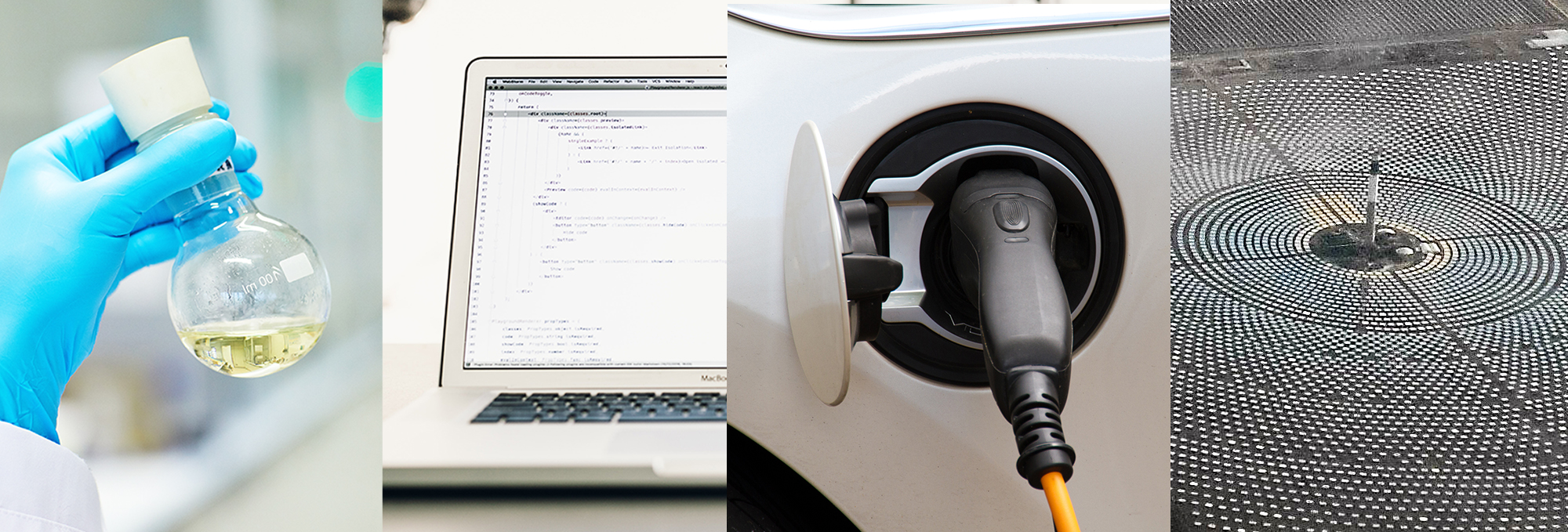
If you want to know the latest trends in energy storage and new developments in research, subscribe.
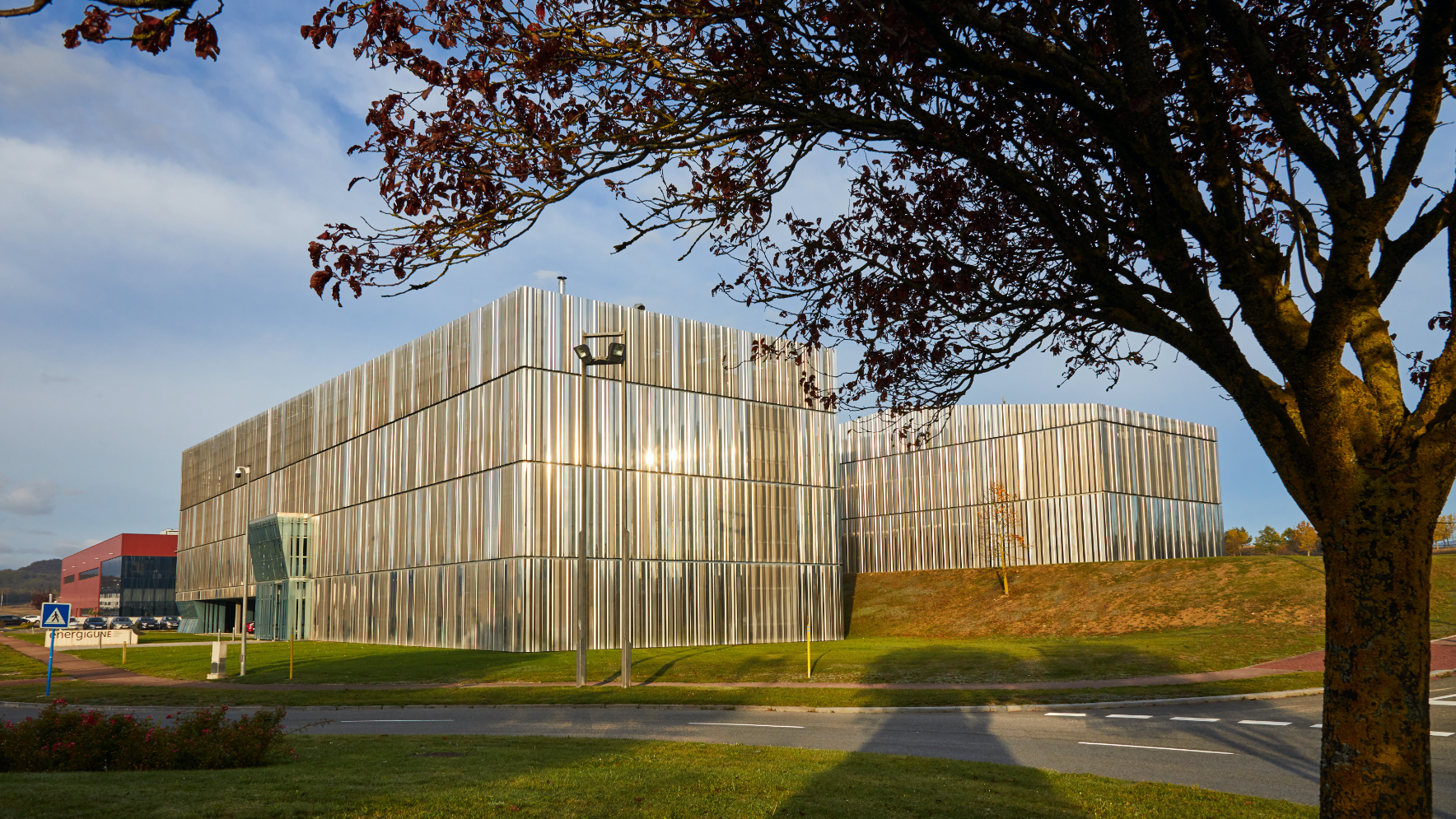
If you want to join a top-level team, collaborate with specialists in multiple disciplines or tell us about your concerns, don't think twice...