

The entry into force of the new European Battery Regulation is driving a profound transformation in strategic industrial sectors such as rail, which must adapt to new requirements related to sustainability, traceability, carbon footprint, recycled content, due diligence and battery life-cycle management. In this context, CIC energiGUNE — a Basque research centre specialising in electrochemical and thermal energy storage and conversion — is collaborating with companies in the railway industry to facilitate the implementation of the regulation and help them address the technical, organisational and data management challenges associated with this new European regulatory framework.
One of the most visible elements of this regulation is the future “Battery Passport”, which will be mandatory in the European Union for certain battery categories and will require traceable digital information on aspects such as sustainability, composition, carbon footprint, circularity and the origin of materials throughout the entire product life cycle.
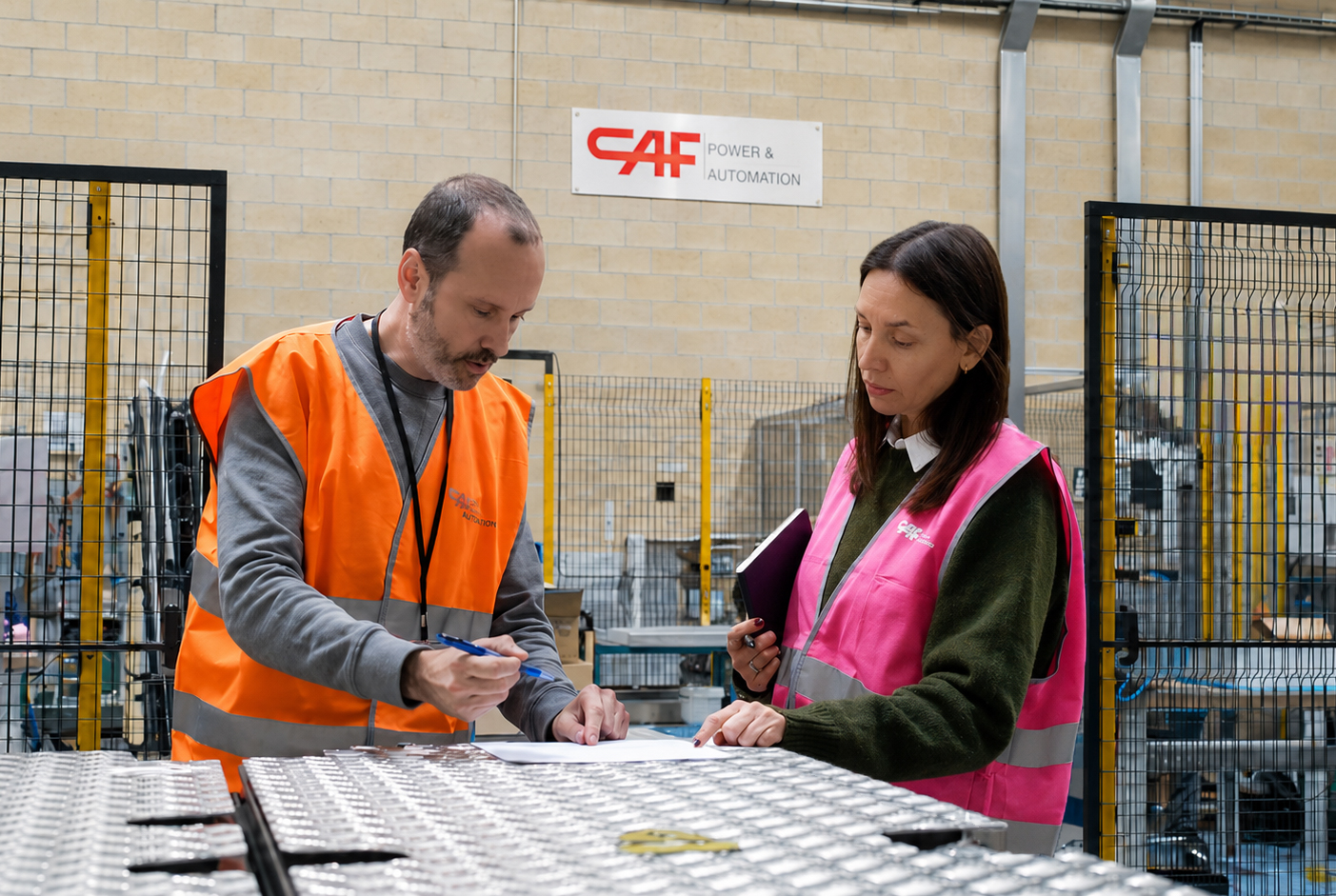
One of the most representative cases of this adaptation process is the work carried out together with CAF Power & Automation, a CAF Group company specialising in power systems and energy storage for railway applications, which has begun implementing the new regulatory requirements in collaboration with CIC energiGUNE’s sustainability team.
The new regulation introduces requirements that go far beyond the traditional safety requirements associated with batteries. It incorporates criteria related to carbon footprint assessment, the origin and traceability of materials, the collection and validation of supply chain data, the sustainability of production processes and the end-of-life management of energy storage systems.
This new regulatory framework is forcing manufacturers and suppliers to develop new capabilities related to the collection, structuring and traceability of information across the entire value chain.
“The regulation landed like a meteorite. Nobody expected that, in such a short period of time, we would have to deal with everything it requires,” explains Ion Onandia, energy storage systems engineer at CAF Power & Automation. “We were not aware of the scale of the information management we would have to address, nor of the complexity involved in obtaining certain data within the supply chain.”