The industry continues to expand, but now from a much more mature, diversified perspective, fully aware that its role in the energy transition is no longer secondary but structural. The trends observed this year point to a sector evolving in multiple simultaneous directions: new chemistries, deep digitalization, renewed regulatory requirements, pressures on raw materials, strategic alliances, and an unprecedented global deployment.
Below are the key trends that defined 2025—understood not as isolated events but as clear indicators of where the industry is headed and what will shape its competitive foundations in the coming years.
1. Real diversification of chemistries beyond traditional lithium-ion
The absolute dominance of lithium-ion is beginning to fade as alternative technologies advance toward industrialization. In 2025, sodium-based chemistries, flow systems, solid-state proposals, and other hybrid approaches have gained visibility. Pressure on lithium, cobalt, and nickel supply, combined with the need for solutions tailored to different segments (large-scale, mobility, stationary applications), has driven a scenario where multiple technological routes coexist. The industry is no longer looking for “the winning chemistry” but for a balanced portfolio that meets diverse needs and reduces dependence on critical materials.
2. Integration of digitalization, AI, and modeling across the full battery lifecycle
Digitalization is no longer an add-on but a central axis. Advanced algorithms, multiscale models, and AI-based systems now enable degradation prediction, state-of-charge optimization, and improved operational reliability in real time. These advances demonstrate that storage value does not lie solely in materials or cells, but also in understanding their dynamic behavior. The convergence of experimentation, simulation, and data marks a new stage in how batteries are designed, managed, and optimized.
3. Sustainability and circularity as strategic and regulatory drivers
2025 has solidified a regulatory environment that requires traceability, minimum recycling rates, and the incorporation of recovered materials into new cells. The circular economy—including second life and advanced recycling—is becoming a competitive requirement rather than an environmental narrative. Legislative and social pressure has accelerated investment in material recovery technologies, as well as in processes that enable closing the loop and reducing reliance on primary resources. Energy storage is now fully aligned with principles of comprehensive sustainability.
4. Safety and lifetime as dominant performance parameters
While energy density remains relevant, it is no longer the main criterion for assessing competitiveness. In 2025, operational safety, thermal stability, electrolyte robustness, separator behavior, and long-cycle degradation have become essential factors. Batteries must be safer, more predictable, and more resilient, especially with the growth of large-scale installations operating under demanding conditions.
5. Geographic expansion of storage and emergence of new markets
Storage is no longer a phenomenon limited to the U.S., Europe, or China. In 2025, emerging markets in Asia, the Middle East, Latin America, and Eastern Europe have expanded rapidly—driven by the need to integrate renewables, strengthen energy resilience, and diversify electricity systems. This global expansion requires greater technological and commercial adaptability, as well as a deep understanding of different regulatory environments. Globalization opens opportunities, but also demands agility and operational flexibility.
6. Storage as a direct complement to renewable energy
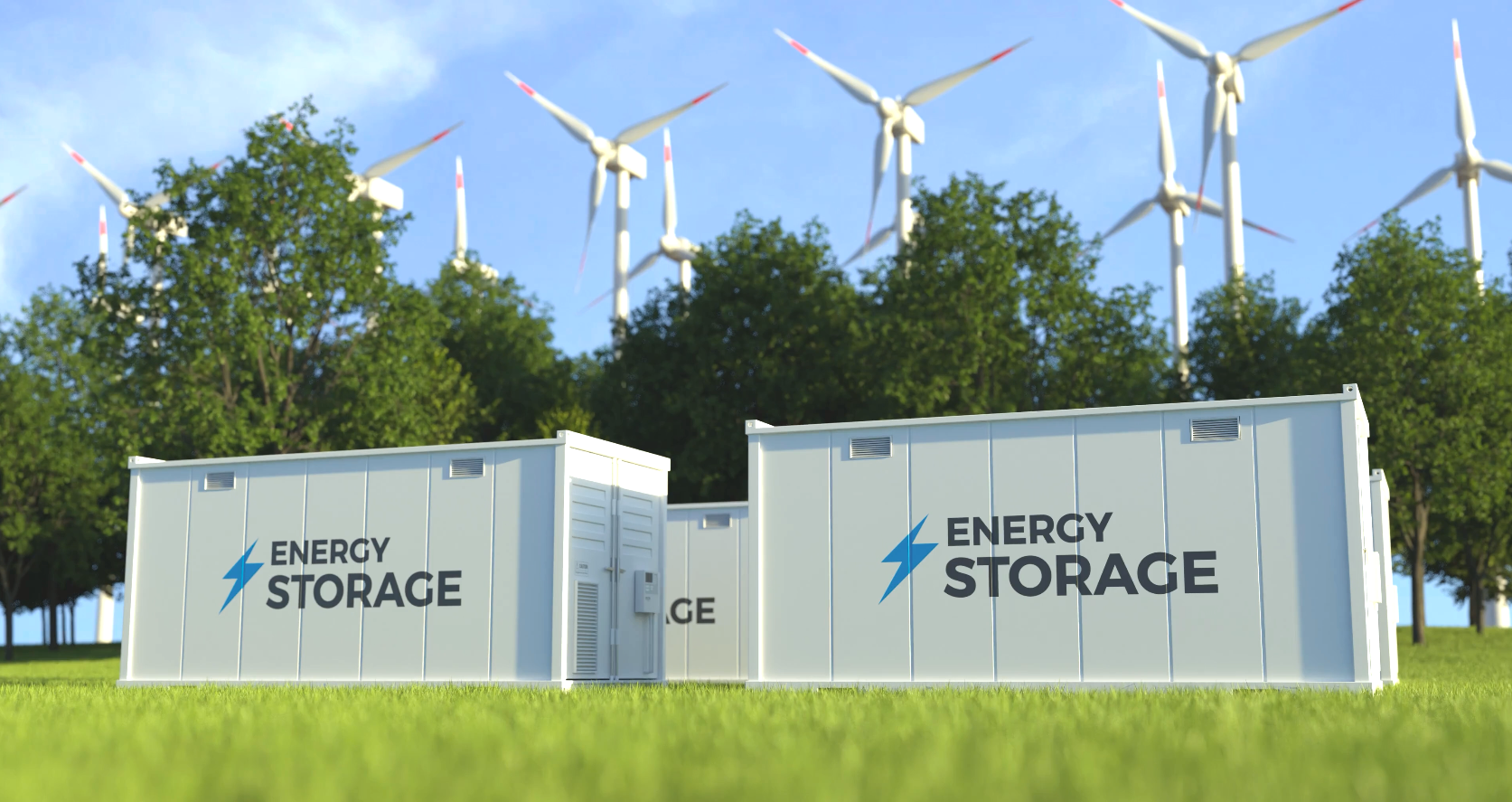
This year has marked the consolidation of the renewables-plus-battery configuration as a standard design in many markets. Structural integration of storage into solar and wind plants has enabled variability management, provision of regulation capacity, and more stable operation. Storage has become a critical tool to make high renewable penetration feasible. Its role is no longer occasional—it is now fundamental to plant architecture.
7. Rise of strategic alliances and international cooperation
The technological and economic complexity of storage has intensified international consortia, public-private partnerships, and cooperation between scientific institutions, industry, and governments. Joint gigafactories, multinational programs, and collaborative research projects reflect a clear trend: the sector requires coordinated efforts to tackle challenges such as material scarcity, massive deployment, or digitalization. Collaboration is no longer desirable—it is indispensable.
8. Growing pressure on raw materials and the need for abundant alternatives
Access to critical materials remains one of the most determining factors for storage growth. Geopolitical tensions, production concentration, and increasing global demand have reinforced the need for chemistries with lower dependence on scarce or costly elements. The push for sodium-, iron-, or manganese-based solutions, along with improved recycling processes, directly addresses this challenge. Supply security is now as important as electrochemical performance itself.
9. Consolidation of large-scale storage as critical infrastructure
Although it appeared earlier in the original sequence, this trend remains one of the most significant of the year. In 2025, grid-connected storage systems have reached a scale that qualifies them as strategic energy infrastructure. Multi-megawatt installations provide ancillary services, fast response capability, and grid stability in environments with high renewable penetration. Storage is now an indispensable component of modern energy architecture.
10. Consolidation of long-duration storage and hybrid technologies
Interest in solutions capable of providing more than 10 hours—or even days—of storage has grown significantly in 2025. Flow batteries, electrochemical-thermal systems, and hybrid concepts are emerging as complementary options for long-duration backup or massive renewable integration. Long-duration storage is developing into a strategic segment, especially for markets that need to manage large-scale intermittent variability.