

FIND THE CONTENTS THAT INTEREST YOU
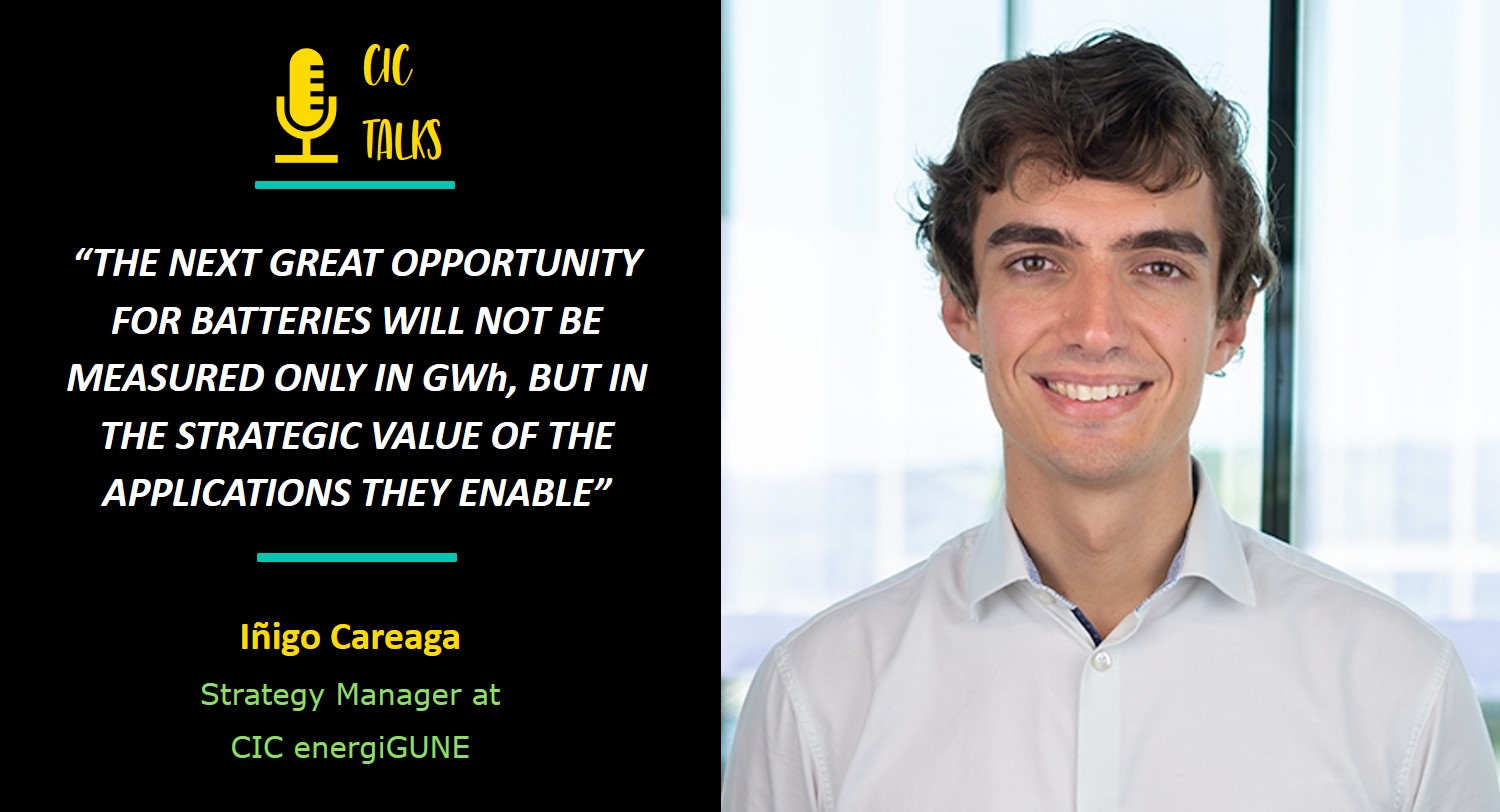
Electric vehicles and stationary storage will continue to account for a huge share of battery demand, but it is becoming increasingly clear that limiting the analysis to these two markets provides an incomplete picture. We are beginning to see batteries taking on a critical role in sectors such as aviation, drones, defence, robotics, the space industry, maritime transport, heavy machinery and even the digital infrastructure associated with data centres.
What is particularly interesting is that not all these markets will require the same volumes or the same performance characteristics. In some cases, very high energy density will be essential; in others, power, safety, the ability to operate under extreme conditions or a very long service life will matter more. This means that, compared with the standardisation we have seen around certain formats and chemistries in the automotive sector, we may be entering a phase of much greater specialisation.
In fact, the International Energy Agency is already pointing out that the strategic importance of batteries is expanding beyond automotive and power grids towards data centres, unmanned defence systems and emerging technologies such as humanoid robots. This reflects an important shift: batteries are moving from being a technology associated with a limited number of sectors to becoming a fundamental component of the modern economy.
Yes, because we often analyse the battery market almost exclusively in terms of installed capacity or GWh consumed, even though this metric does not always reflect the strategic importance or added value of an application. A satellite, an advanced drone or an electric aircraft will consume negligible amounts of battery capacity compared with millions of vehicles, but in those systems the battery can directly determine autonomy, payload, range or even the viability of the application itself.
In these markets, moreover, cost per kWh may cease to be the main decision-making criterion. A more expensive technology could make sense if it reduces weight, significantly increases range, enables safer operation or maintains performance under extreme conditions. This is why some technologies that may struggle to compete with LFP in stationary storage or automotive applications could find a highly attractive opportunity in specialised markets.
This also requires a change in the way we understand technological development. It will not always be necessary to find a battery capable of competing across every parameter at the same time. What matters is identifying the applications in which a particular chemistry, architecture or material provides a sufficiently significant advantage to justify its entry into the market.
There are several particularly interesting groups of applications. The first relates to autonomous systems, including drones, mobile robots, humanoid robots and different platforms used in both industry and defence. In all these cases, there is a very direct relationship between the energy available and the capabilities of the system: the greater the energy autonomy that can be achieved while keeping weight low, the greater its operational autonomy can also be.
A second area consists of applications in which weight and volume are extremely critical, such as aviation and space. This is probably where we find some of the strongest incentives for developing high-energy-density technologies, because any improvement can translate directly into greater range, increased payload or architectures that are not yet viable today. Technologies such as lithium-metal, solid-state or lithium-sulphur batteries are particularly interesting from this perspective.
And there is a third group that could grow extremely rapidly: digital infrastructure. The expansion of data centres and artificial intelligence is simultaneously increasing electricity demand and the need for extremely reliable systems. The IEA estimates that new installations of battery-based UPS systems —primarily linked to data centres— grew by 30% during 2025, reaching around 45 GW.
We should probably distinguish between markets that are already growing and those whose potential still depends on achieving certain technological breakthroughs. Drones and other autonomous systems would clearly belong to the first group. These are applications that already exist commercially and where any improvement in autonomy, power or weight reduction can have an immediate impact. In fact, we are seeing battery requirements become increasingly demanding as drones move from relatively simple applications towards logistics, industrial inspection, security and defence.
Data centres represent another immediate opportunity, although with a completely different rationale. Here, the battery does not have to move a vehicle; instead, it has to ensure that digital infrastructure can continue operating when problems arise in the electricity grid and, potentially, also help manage power peaks or provide flexibility. With the growth of artificial intelligence, this role could become considerably more important over the coming years.
Aviation and space probably represent lower-volume opportunities, but with extremely high added value. Electric aviation still needs a substantial increase in battery specific energy to expand certain applications, while in space, reliability, mass and the ability to operate under extreme conditions are critical. It is precisely in these types of markets that advanced technologies may find their first applications before reaching sufficient volumes to compete in the automotive sector.
It is difficult to imagine exactly the same transformation occurring again, because the electric vehicle has created a market on an extraordinary scale.
However, there are sectors in which improving battery performance could bring about a qualitative change; in other words, it could make possible things that are currently difficult, uncompetitive or simply impossible.
Robotics is one of the clearest candidates. We are seeing enormous advances in artificial intelligence, perception, control and movement capabilities, but all these systems require energy.
If we can enable a robot to work for longer, charge faster or carry significantly lighter batteries, we will not simply be improving one of its components: we will be directly increasing its productivity and expanding the number of tasks for which it can be used.
Something similar could happen with drones and, in the longer term, with certain forms of electric aviation. CIC energiGUNE has already highlighted that the evolution of drones will increasingly depend on the ability of their batteries to simultaneously provide autonomy, low weight and safety, since these variables determine critical factors such as range and payload.
They can do so in two different ways. On the one hand, artificial intelligence requires physical infrastructure that consumes increasing amounts of energy. Behind the models, algorithms and digital services are data centres that need to guarantee continuous power supply and manage increasingly high power levels. In this context, batteries can play a growing role not only as backup in the event of an interruption, but also as a tool for managing the relationship between the data centre and the electricity system more flexibly.
On the other hand, when we bring artificial intelligence into the physical world through robots, drones or autonomous vehicles, another challenge emerges: energy autonomy. We can develop extraordinarily sophisticated systems from a software perspective, but their usefulness becomes limited if they constantly need to stop and recharge. In these applications, being able to store more energy within the same weight or volume becomes a very important competitive advantage.
This convergence between AI and batteries is probably one of the most interesting trends for the coming years. The IEA already groups digital infrastructure associated with artificial intelligence, unmanned defence systems and humanoid robots among the areas expanding the economic and strategic importance of batteries.
Allowing for the obvious differences between these technologies, I believe we can begin to use that concept. An enabling technology is one whose development simultaneously influences the evolution of numerous sectors, and batteries are beginning to fulfil precisely that role. We are no longer talking only about electrifying cars: we are talking about power grids, telecommunications, data centres, drones, robots, aviation, space and defence systems.
This also has an important industrial consequence. When a technology becomes cross-cutting, dependence on third parties is no longer only a problem for that particular sector; it is transmitted to all the industries that depend on it. Global production of batteries and many of their components remains highly geographically concentrated. According to the IEA, China manufactured well over 80% of the world’s batteries in 2025, while European factories continue to rely significantly on imported components.
The debate around batteries is therefore beginning to resemble more and more the debate Europe is already having around semiconductors, critical raw materials and artificial intelligence. It is no longer simply a question of how much it costs to manufacture a cell, but of asking which industrial capabilities we want to retain because other strategic technologies depend on them.
The first opportunity is fairly obvious: the more critical data centres become and the greater their power requirements, the more important it will be to guarantee continuity of supply. Battery-based UPS systems already perform this role, supplying power in the moments immediately following an interruption until other backup systems come online. The fact that new installations of these systems grew by around 30% in 2025 illustrates how quickly this market is evolving.
However, the most interesting opportunity may emerge when batteries are no longer used exclusively for emergencies. A data centre has considerable storage capacity which, with the appropriate architecture and regulation, could also be used to manage demand peaks, optimise electricity consumption, make better use of renewable generation or even provide certain flexibility services to the grid. This would considerably change the economics of the system because the battery would no longer be an asset simply waiting for a failure to occur.
Furthermore, this market could favour technologies different from those that dominate electric vehicles. In a data centre, weight is much less important, while safety, availability, lifetime, rapid response and total cost of ownership can be decisive. This creates room for different chemistries and architectures, including solutions in which material abundance, safety or cycle life are more important than achieving maximum energy density.
The major opportunity, therefore, may lie in moving from viewing the battery as insurance against a grid outage to seeing it as an active part of the energy infrastructure of the digital economy.
At CIC energiGUNE, we have an advantage that becomes particularly important as applications begin to diversify: we work across a very broad range of electrochemical technologies, from today’s lithium-ion batteries to solid-state, lithium-metal, lithium-sulphur and sodium-ion technologies. This allows us to analyse each application according to its specific requirements rather than necessarily starting from the assumption that there is a single chemistry that must serve every market.
We also have capabilities covering a large part of the development chain, from materials research and characterisation to cell prototyping. Our platform allows us to work with different technologies and formats —including pouch and cylindrical cells— and to scale electrode and electrolyte materials to the quantities required for industrial pre-prototyping. This bridge between materials, cells and applications is particularly important in emerging markets, where chemistry, architecture and manufacturing processes often need to be adapted simultaneously.
We are also already working on some of these applications. In aviation, CIC energiGUNE leads the European HELENA project for the development of high-performance solid-state batteries and has assembled full cells within the project. It also participates in SAGELi, which focuses on improving the safety of batteries intended, among other applications, for air and maritime mobility. In space, we also have previous experience in developing solutions for satellites, while more recently we have specifically analysed the requirements posed by the growing drone market.
The positioning we are seeking, therefore, is not simply about developing “the next battery”, but about understanding which battery each application needs. In some markets, the priority will be energy density; in others, safety, power, operation at extreme temperatures, cost or sustainability. Our ability to work from materials through to the cell, and to do so jointly with companies, enables us to address precisely this specialisation, which we believe will be one of the major trends shaping the next generation of batteries.


If you want to know the latest trends in energy storage and new developments in research, subscribe.

If you want to join a top-level team, collaborate with specialists in multiple disciplines or tell us about your concerns, don't think twice...