

FIND THE CONTENTS THAT INTEREST YOU
The Battery Passport has taken an important step towards practical implementation. CIC energiGUNE has previously examined the role of the Digital Battery Passport in Europe´s strategy for a more sustainable and traceable industry, but the new documentation published by the Commission now makes it possible to move beyond the general framework towards much more specific data requirements.
The European Commission has published version 2.0 of “Digital Batteries Passport – data points by category”, a guidance document dated 15 August 2026 that organises the information covered by the European Battery Regulation into 71 data points and clarifies how these apply to electric vehicle batteries, light means of transport (LMT) batteries and industrial batteries with a capacity exceeding 2 kWh. Read the European Commission´s “Digital Batteries Passport – data points by category”.
The significance of this publication does not lie in the introduction of new obligations. The Commission explicitly states that the document must be read alongside Regulation (EU) 2023/1542 and the relevant delegated and implementing acts, and that it does not extend the legally established obligations. Read Regulation (EU) 2023/1542.
CIC energiGUNE has also previously analysed the main elements of the new European Battery Regulation, which introduces requirements related to sustainability, performance, safety, recycling, recycled content, traceability and life-cycle management.
The new guidance now goes one step further: it translates these regulatory requirements into a much more concrete roadmap for industry.
For the first time, companies can see in a structured way what information they will need to prepare, which requirements depend on their battery type and which fields will not yet be required when the Battery Passport becomes mandatory.
And that deadline is getting closer.
From 18 February 2027, the Battery Passport will be mandatory for electric vehicle batteries, LMT batteries and industrial batteries with a capacity exceeding 2 kWh placed on the European Union market.
Batteries will also be the first product group for which a Digital Product Passport becomes mandatory in the EU, according to the specific information published by the European Commission on the Digital Product Passport for Batteries.
Until now, much of the industrial discussion has focused on identifying the main categories of information the passport would contain: composition, performance, sustainability, circularity, repair and recycling.
The new guidance takes this one level further.
The 71 data points identify specific information that must be available depending on the battery and the requirements applicable to it.
These include relatively basic information, such as:
the battery´s unique identifier;
the identity of the person responsible for the Battery Passport;
manufacturer, model and serial number;
place and date of manufacture;
weight and capacity;
battery chemistry;
hazardous substances;
critical raw materials present above certain thresholds.
But the scope extends far beyond a technical specification sheet.
It also includes parameters such as minimum, nominal and maximum voltage, power capability, expected lifetime, internal resistance, energy efficiency, warranty information and certain performance and durability data.
Another particularly important category concerns circularity: information relating to battery composition, components, spare parts, safety measures and dismantling, including data intended to facilitate the management of the battery at the end of its first life.
In other words, the Battery Passport will not simply describe how a battery performs. It must also provide information that helps explain how it is built and how it can be managed when the time comes to repair, reuse, remanufacture or recycle it.
This information becomes especially valuable when a battery enters reuse processes. CIC energiGUNE has been working for years on the opportunities and challenges associated with second-life batteries, where understanding the condition and history of a product is essential to determining whether it can be reused.
This is probably one of the most useful contributions of the new guidance.
The fact that the Regulation includes a particular data point in the Battery Passport does not necessarily mean it must be displayed from 18 February 2027.
The Commission now clearly distinguishes between mandatory, optional and conditional information, as well as data that will not yet need to be completed or displayed when the obligation takes effect.
For example, the carbon footprint declaration and label are among the passport´s data points, but the guidance establishes that they will not need to be displayed in February 2027 because their format still has to be defined through the corresponding implementing legislation.
Nevertheless, the carbon footprint of batteries is one of the key elements of the new European regulation and already represents a major challenge for industry, particularly because of the need to collect reliable information on materials, manufacturing, energy, transport and other processes distributed throughout the value chain.
Information on responsible sourcing linked to due diligence will also not be required in February. The updated guidance links it to the application of these obligations from August 2027.
The same applies to the percentages of cobalt, lithium, nickel and lead recovered from waste and incorporated into batteries. Their inclusion will follow the timetable established for recycled-content requirements and the corresponding legislation.
The implication for companies is significant: there is no single checklist that applies to every battery and every deadline.
The first task is precisely to determine which requirements apply to each product and when.
The new documentation confirms another fundamental point: the applicability of certain data varies depending on the battery category and its characteristics.
For industrial batteries, for example, some requirements will depend on whether the battery is rechargeable, whether it has a Battery Management System, whether it is used for stationary storage, whether it operates as a backup battery or even which materials it contains.
In other cases, the differences are explicit. The parameter relating to the capacity threshold for exhaustion, for example, is mandatory for electric vehicle batteries but does not need to be completed for LMT or industrial batteries.
This introduces a point that may seem obvious but will have important practical implications:
preparing for the Battery Passport first requires correctly identifying the type of battery being marketed and the obligations that apply to it.
One of the most transformative aspects of the Battery Passport is that not all its information will be fixed at the point of manufacture.
The Regulation also provides for dynamic data, meaning information that can evolve as the battery is used.
The new guidance identifies parameters relating to:
capacity and capacity fade;
power and power fade;
internal resistance and its evolution;
energy efficiency, where applicable;
expected lifetime;
state of health;
battery status;
number of charge and discharge cycles;
certain negative events, such as accidents;
operating environmental conditions;
state of charge.
Their applicability depends on the battery category and characteristics, but they introduce a fundamental difference compared with traditional product information systems.
The passport must be capable of reflecting how the battery evolves throughout its service life.
The Commission had already clarified in its working sessions with industry that certain performance and durability parameters must be updated when appropriate, that some usage-derived data will be updated periodically and that, for certain batteries subject to Article 14, state-of-health information may require daily updates.
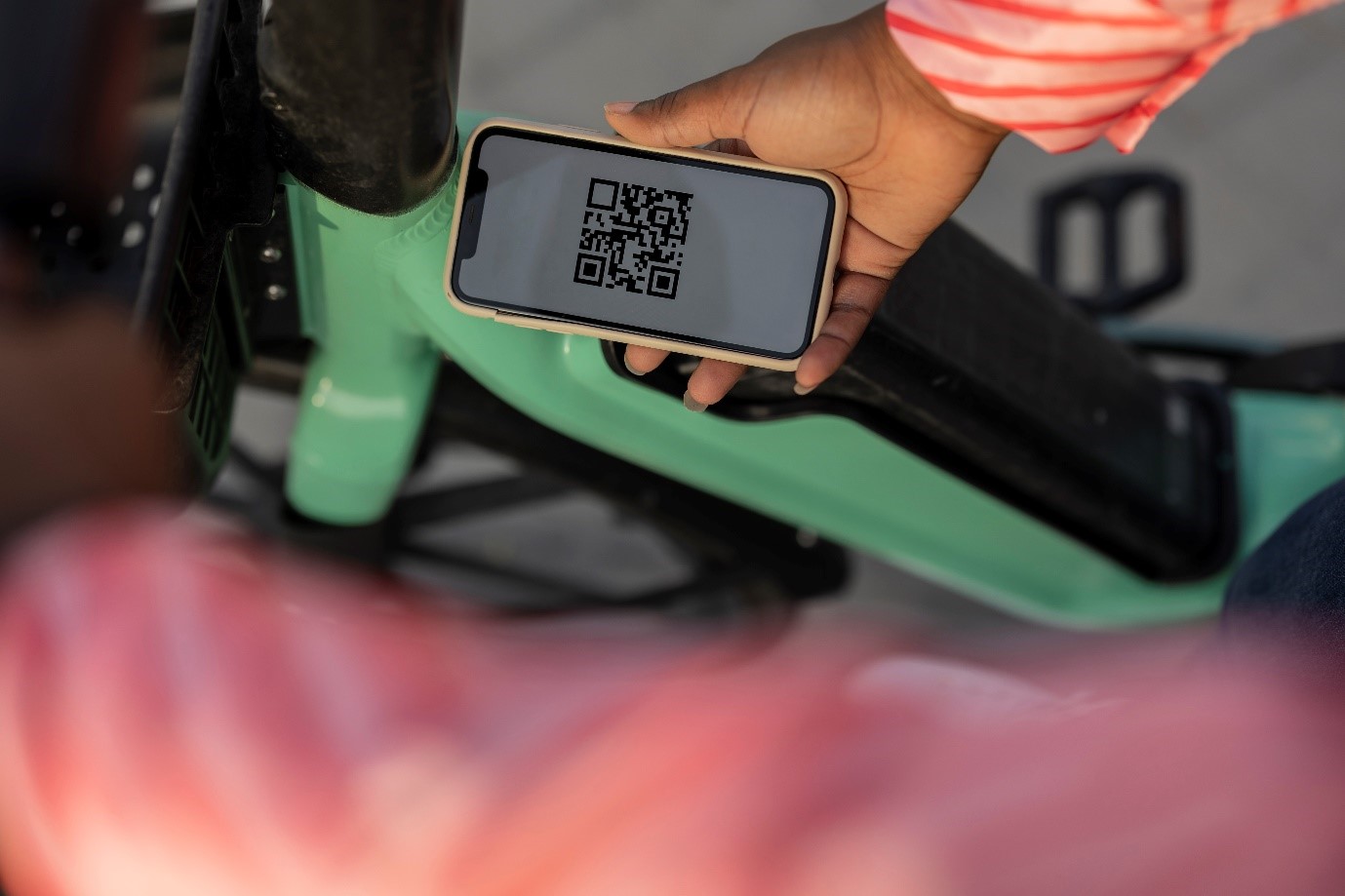
This makes the Battery Passport something very different from generating a PDF, filling in a database once or placing a QR code on a product.
Responsibility for creating and maintaining the passport lies with the economic operator placing the finished battery on the European Union market, rather than with the individual suppliers of its components or modules. The Commission indicates that this operator will normally be the manufacturer established in the EU or the importer, and that it may authorise another party in writing to act on its behalf.
This has particularly important implications for battery pack manufacturers, OEMs and importers.
Although they bear ultimate responsibility, a significant proportion of the information required is not generated within their own organisations.
It may be held by cell manufacturers, material suppliers, component producers, logistics operators or companies located in other countries.
The Commission also defines a decentralised architecture: detailed product information is kept outside a large central EU database, while the DPP Registry provides the infrastructure needed to register unique identifiers and associated metadata.
The DPP Registry has been operational since 20 July 2026, together with a testing environment designed to help companies prepare. The European Commission announces the launch of the DPP Registry.
Implementation is therefore no longer a future scenario.
It is already underway.
The battery life cycle adds another layer of complexity.
The documentation presented by the Commission explains that when a battery is remanufactured or repurposed, a new Battery Passport must be generated and a new operator will assume responsibility for it. When the battery becomes waste, responsibility will pass to the relevant actor involved in its management.
The passport must also reflect changes in the battery´s status.
Traceability therefore no longer ends at the factory gate.
It extends to repair, second-life applications, remanufacturing and recycling.
The publication of the 71 data points makes one of the major implementation challenges even more apparent.
Data exists in different places, belongs to different companies and has not always been generated with the expectation that it would one day need to be integrated into a Battery Passport.
This difficulty is already becoming evident in real industrial projects. The collaboration between CIC energiGUNE and CAF Power & Automation to adapt to the new European Battery Regulation is helping to address challenges related to sustainability, traceability, carbon footprint, life-cycle management and the collection of information from different actors throughout the supply chain.
The international dimension creates additional challenges.
During a webinar organised by the European Commission, Catena-X presented a pilot project developed with CATL and BMW to demonstrate the exchange of Battery Passport information between China and Europe. In its first phase, the pilot was able to cover approximately 80% of the static data requirements considered, while certain sensitive information was excluded from the exchange.
This is neither a regulatory benchmark nor a percentage that can be extrapolated to the industry as a whole, but it illustrates the problem particularly well:
compliance with the Battery Passport will depend both on data quality and on the ability to share that data across complex supply chains.
The Commission´s new guidance reduces some of the uncertainty.
We now have a much clearer understanding of what information the passport covers and how its applicability varies.
But this also makes the next challenge easier to identify.
Between now and February 2027, the companies concerned will need to move from regulatory interpretation to implementation:
identifying batteries subject to the passport, mapping the applicable data points, locating information sources, identifying missing data, coordinating with suppliers, validating methodologies, defining internal responsibilities and preparing systems capable of maintaining that information throughout the product´s life cycle.
18 February 2027 should not be the date when a company starts asking how to build its Battery Passport.
It should be the date when the system is already working.
The Commission´s new guidance helps define the objective more precisely, but it does not eliminate the technical complexity behind many of the data requirements.
Aspects such as carbon footprint, Life Cycle Assessment (LCA), material composition, recycled content, performance and durability, and supply-chain traceability require reliable information and, in many cases, specific technical capabilities and methodologies.
Life Cycle Assessment, for example, makes it possible to evaluate the environmental impacts of a product from raw material extraction and processing through manufacturing, use and end of life, providing essential information to address the new sustainability requirements from a comprehensive perspective.
CIC energiGUNE works with companies to help them interpret and prepare for the new European requirements applicable to batteries, identify the necessary data, detect information gaps and make progress in data collection, calculation and validation.
Experience gained through industrial projects shows that one of the main challenges is not simply creating the digital passport, but building the reliable information that must underpin it.
For companies seeking a deeper understanding of this new regulatory environment, CIC energiGUNE has prepared the white paper “THE DIGITAL BATTERY PASSPORT. Regulation, Sustainability and Industrial Transformation in Europe”, aimed at battery manufacturers, suppliers, OEMs and other industrial stakeholders seeking to anticipate new requirements, reduce compliance risks and improve their data readiness. Access the white paper “THE DIGITAL BATTERY PASSPORT”.
The report analyses the impact of the European Battery Regulation and the implications of the Battery Passport in areas such as sustainability, LCA, carbon footprint, circularity, recycled content, due diligence and digitalisation.
Because from 2027 onwards, a battery will no longer have to demonstrate only how it performs.
It will also have to tell its story through data.



If you want to know the latest trends in energy storage and new developments in research, subscribe.

If you want to join a top-level team, collaborate with specialists in multiple disciplines or tell us about your concerns, don't think twice...